Best Countertop Installers For Historic Sugar House Homes: How To Choose The Right Fit In 2026
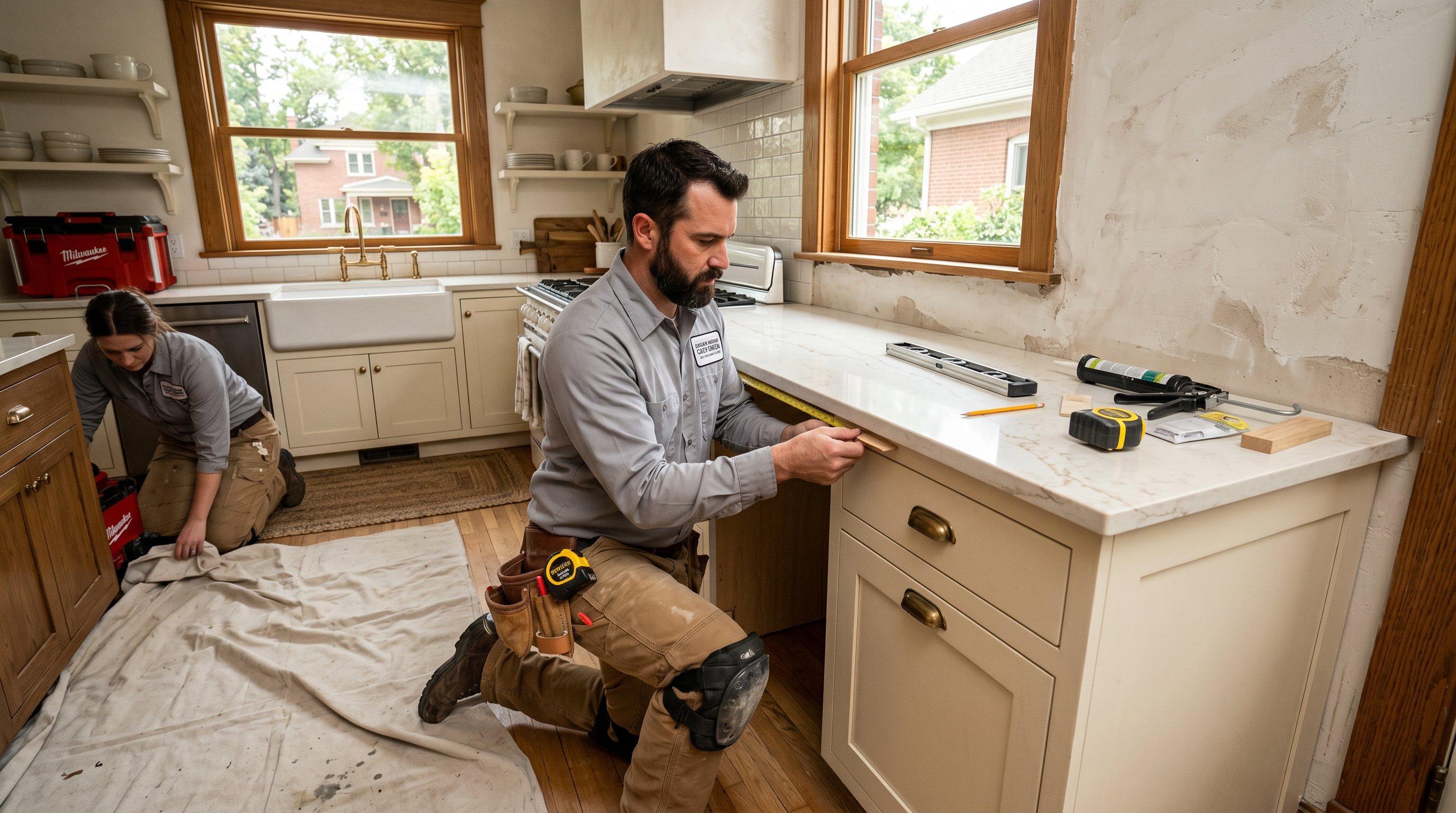
Historic Sugar House homes have personality you can't fake, original trim, quirky walls, vintage layouts, and kitchens that rarely behave like a modern box. That's exactly why choosing a countertop installer here takes more than comparing prices online. In older Salt Lake City homes, the real difference is in field measuring, cabinet prep, material guidance, and how carefully a crew works around uneven walls and aging structures. We've seen that the best results come from installers who understand both preservation and performance. If you're planning a kitchen upgrade in 2026, here's how to choose the right fit without risking expensive surprises.
What Makes Countertop Installation Different In Historic Sugar House Homes
Historic Sugar House kitchens often come with conditions that newer homes simply don't. Floors may slope. Walls may bow. Cabinet runs might not be perfectly square, and older plumbing or electrical updates can limit what's possible during installation.
That matters because countertops are unforgiving. Stone, quartz, and even butcher block need accurate templates and solid support. A small measuring error in a 1920s or 1940s kitchen can turn into visible gaps, stress cracks, or awkward seams.
There's also the style question. In historic homes, countertops shouldn't feel disconnected from the house. The best countertop installers know how to balance period character with present-day durability, whether that means pairing honed quartz with painted cabinetry or choosing a subtle slab profile that doesn't overpower original architectural details.
In Sugar House especially, many remodels are also partial rather than full gut jobs. That means installers must work with existing cabinetry, tight access, and lived-in homes. Clean job sites, careful handling, and realistic expectations are part of the job, not extras.
How To Evaluate A Countertop Installer For Older Kitchens
Start with experience in older-home remodeling, not just countertop fabrication. An installer can be excellent in new construction and still struggle in a historic kitchen where nothing is perfectly level.
Ask to see local project photos, ideally in Sugar House, Salt Lake City, or similar neighborhoods with older housing stock. Look for tight wall scribing, thoughtful seam placement, and how well the counters fit around existing windows, trim, and vintage details.
You'll also want to know who is coordinating the work. Countertop installation depends heavily on cabinet condition, sink specs, appliance dimensions, and timing. Teams that handle broader kitchen remodeling, cabinet design, or kitchen cabinet installation usually have a better grasp of the full picture.
At Caliber Cabinets, for example, we approach countertops as part of the entire kitchen system. Our free in-home consultations and 3D renderings help homeowners see how countertops, cabinetry, island proportions, hood vent details, and lighting work together before construction starts.
Finally, verify the basics: licensed and insured status, clear warranty terms, itemized quotes, and references you can actually call.
Questions To Ask Before You Sign A Countertop Contract
Before signing anything, ask direct questions. Good installers won't dodge them.
Here are the big ones:
- Who performs the field measurements and templating? Precision matters more in older homes.
- What happens if the cabinets are out of level? You want a clear plan before fabrication starts.
- Is cabinet repair or shimming included, or is that extra?
- How are seams placed and approved?
- Who disconnects and reconnects plumbing or appliances?
- What are the lead times from template to install?
- What could change the final price?
It's also smart to ask about the full project schedule. In Utah, many kitchen remodels run about 4 to 8 weeks from demo to final countertop installation and backsplash finishing, depending on scope. If a contractor gives you a vague timeline, that's usually not a great sign.
And ask how they protect your home. Dust control, floor protection, and communication matter more than people realize, especially if you're living in the house during the remodel.
Best Countertop Materials For Historic Character And Modern Use
The best countertop material for a historic Sugar House home is usually the one that respects the house without making daily life harder.
Quartz is a strong choice for many families. It offers consistent patterning, low maintenance, and excellent durability. In historic kitchens, softer designs, creamy whites, warm veining, muted grays, tend to feel more at home than ultra-bold contemporary patterns.
Natural quartzite works well if you want more organic movement and a higher-end feel. It can be stunning, but material selection matters because some slabs are busier than others.
Granite still deserves consideration, especially in homes where a little natural variation adds warmth. Some granites fit older architecture beautifully.
Butcher block can be charming in the right setting, particularly on an island or baking zone, though it requires more upkeep in Utah's dry climate.
For many remodels, the winning formula is mixed materials: durable quartz on the perimeter, warmer wood accents on an island, and custom cabinets Utah homeowners can tailor around how they actually cook. That approach often preserves character better than forcing one surface everywhere.
How Cabinet Condition, Leveling, And Layout Affect The Final Result
This is the part homeowners often don't see until something goes wrong: countertops are only as good as what sits underneath them.
If cabinet boxes are weak, damaged, or poorly anchored, even a beautiful slab won't perform well. In older homes, we often find sagging runs, past DIY modifications, or cabinet tops that are nowhere near level. Those issues have to be corrected before templating.
Layout matters too. If you're changing sink size, adding a larger island, or upgrading to heavier surfaces, support requirements change. That's especially true in Utah homes where we also think about structural integrity and secure anchoring. Along the Wasatch Front, that's not overkill, it's smart building.
This is where integrated remodeling teams have an edge. When cabinetry, layout, and countertop planning happen together, there's less finger-pointing and fewer costly delays. We've found that details like deep drawer banks, appliance garages, and custom islands only work well when the cabinet and countertop plans are coordinated from day one.
Red Flags That Can Lead To Damage, Delays, Or Costly Rework
A low quote can get expensive fast if the installer misses the realities of an older Sugar House home.
Watch for these red flags:
- No in-home inspection before pricing
- One-page quotes with little detail
- No discussion of cabinet leveling or substrate condition
- Unclear responsibility for plumbing, demo, or backsplash repair
- Pushy material recommendations that ignore the style of the house
- No proof of insurance or contractor licensing
Another warning sign: overpromising on schedule. Quality countertop work involves measurements, fabrication, coordination, and careful install. If someone says they can do everything unusually fast without seeing your kitchen properly, be cautious.
We'd also be wary of crews that treat dust protection and communication as afterthoughts. Good remodelers use barriers, protect adjacent rooms, and keep homeowners updated. That sounds small, until your living room is covered in demolition dust and nobody returns your call.
In short, the best countertop installers for historic homes act more like problem-solvers than order-takers.
Conclusion
Choosing the right countertop installer for a historic Sugar House home comes down to fit, not just price. You want a team that understands old-house quirks, cabinet prep, material performance, and clean coordination from design through installation. If you're comparing custom countertops Utah options in 2026, prioritize experience, transparency, and craftsmanship, the finished kitchen will show the difference every day.