Best Hard Water Faucet Picks For Eagle Mountain Kitchens In 2026
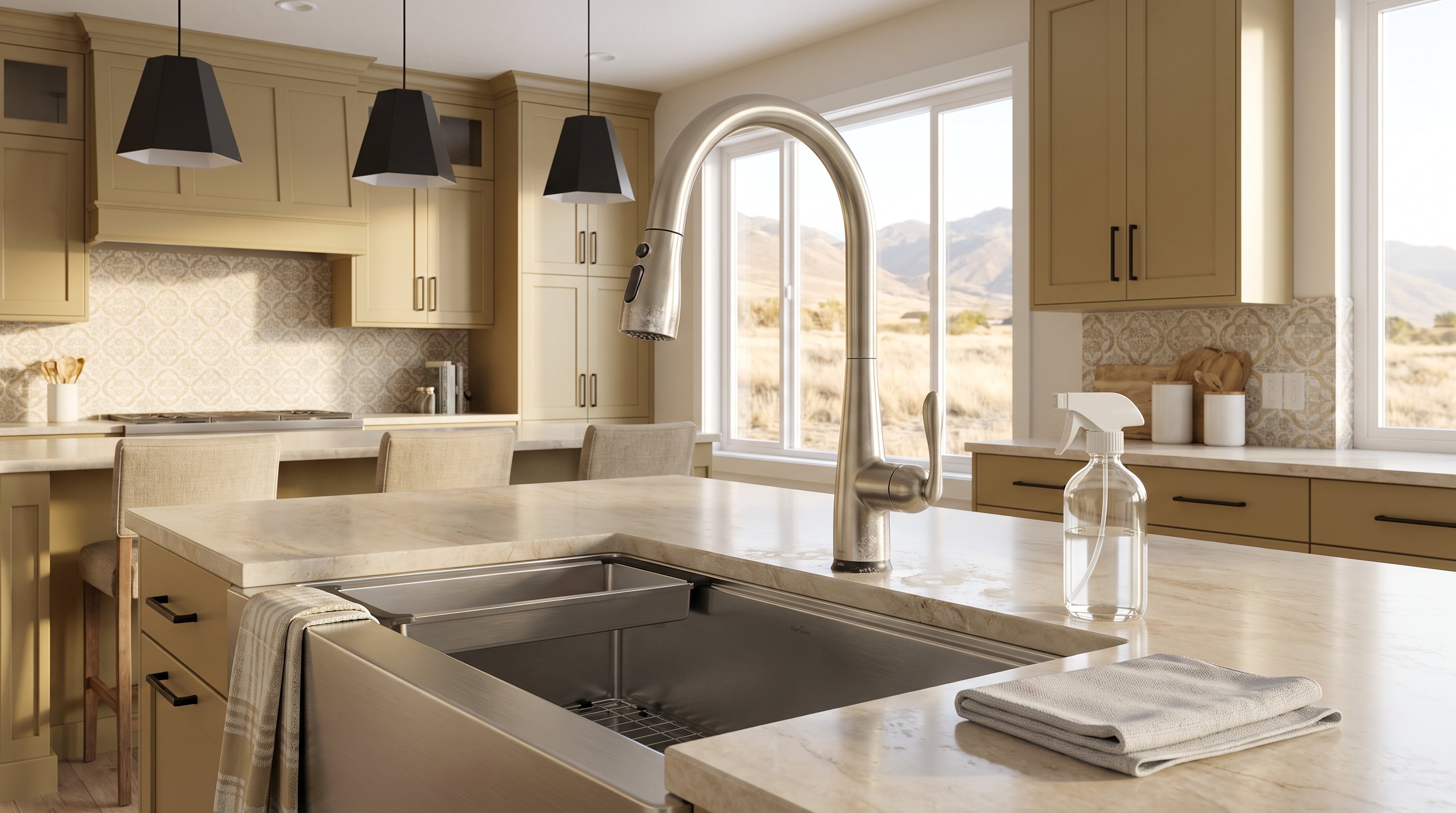
Turn on a kitchen faucet in Eagle Mountain for a few months, and the evidence starts showing up fast: chalky rings near the base, a crusty aerator, water spots that seem to reappear right after cleaning. That's not just a housekeeping annoyance. It's a buying clue. When we help Utah homeowners plan kitchen upgrades, we look at hard water first, because the wrong faucet can look tired long before the rest of the remodel does.
Why Hard Water Matters When Choosing A Kitchen Faucet In Eagle Mountain
Hard water should shape your faucet choice from day one because Eagle Mountain homes often deal with water that leaves behind calcium and magnesium deposits. Those minerals cling to spouts, collect inside aerators, and wear on moving parts over time. A faucet that looks great in a showroom can become frustrating in real daily use if it wasn't built for mineral-heavy water.
In practical terms, hard water causes three common issues. First, visible spotting makes polished finishes look dirty even when the kitchen is clean. Second, restricted flow happens when buildup narrows the aerator or spray head. Third, stiff handles and weak sprayers can show up sooner on cheaper fixtures with lower-grade internal parts.
That matters even more during a remodel. If we're pairing a new faucet with custom cabinets, stone counters, or a reworked sink base, we want the fixture to age at the same pace as the rest of the kitchen. A faucet is one of the most-touched items in the room, so poor performance stands out quickly.
When homeowners in Eagle Mountain compare products, we usually suggest thinking beyond style and finish boards. Ask how the faucet handles mineral exposure, how easy it is to clean, and whether replacement parts are easy to get in a few years. That's the difference between a fixture that photographs well and one that still works smoothly after countless pots, school lunches, and late-night dish piles.
The Faucet Features That Hold Up Best Against Mineral Buildup
The best hard water faucets share a few specific traits: finishes that hide spotting, valves that resist wear, and components you can clean without taking half the fixture apart. Those details matter more than brand hype.
Price alone doesn't guarantee performance. We've seen expensive faucets with fussy finishes and hard-to-service sprayers create more irritation than simpler models built with better internals. For Eagle Mountain kitchens, we focus on durability you'll notice every week, not just on installation day.
Spot-Resistant Finishes
Brushed and spot-resistant finishes usually perform best in hard water homes. Fingerprints are less obvious, but the bigger win is that mineral spots don't scream at you from across the room. Brushed nickel, matte black, and many modern stainless finishes tend to be forgiving. Highly polished chrome can still work, though it shows residue faster.
PVD-coated finishes are often worth the upgrade because they resist scratching and surface wear better than basic plated options. That matters near sink rims where cleaners, rings, and daily contact add up. If the kitchen leans warm or natural, a brushed brass tone can work well too, but we'd still favor versions marketed as easy-clean rather than lacquer that demands special care.
Finish choice should also match the rest of the remodel. In homes getting custom cabinets Utah, we often coordinate faucet sheen with cabinet hardware so the room feels intentional instead of pieced together.
Ceramic Disc Valves And Easy-Clean Aerators
Ceramic disc valves are the best internal mechanism for hard water durability. They handle repeated on-off cycles well and are less likely to drip early than older washer-based designs. If a faucet listing doesn't mention ceramic disc valves, that omission tells us something.
Easy-clean aerators matter just as much. Mineral buildup tends to gather where water exits the fixture, so a faucet with a removable or rub-clean aerator saves time. Silicone nozzles on pull-down sprayers are especially useful because scale can often be wiped off with a thumb instead of soaked for an hour.
We also like faucets with accessible cartridges and common replacement parts. A repairable faucet is usually a better long-term value than a cheaper unit you'll replace completely. During kitchen planning, the same logic applies across the room: layout and serviceability matter as much as looks, which is why strong cabinet installers pay attention to what happens after the final reveal.
Top Kitchen Faucet Styles For Utah Homes With Hard Water
For most Utah homes with hard water, pull-down single-handle faucets are the best mix of function, cleanability, and durability. They have fewer separate touchpoints than widespread bridge designs, and they're easier to wipe down around the base.
Single-handle pull-down models work especially well in busy family kitchens because one lever controls temperature and flow quickly. That sounds minor until your hands are messy and you're juggling a sheet pan. We often pair these faucets with large reinforced islands and workstation sinks because they support the way many Eagle Mountain families actually use the kitchen.
Commercial-style spring faucets can also be a smart choice if you cook often and want reach. The exposed design makes some parts easier to rinse, but quality matters here. Lower-end spring models can collect residue around joints and coils, so we'd only use them when the construction feels solid and the spray head is easy to maintain.
Bridge faucets are usually the style we recommend most carefully. They look great in farmhouse or traditional kitchens, but they have more exposed geometry and more surfaces where scale can gather. If a homeowner loves the look, we'd steer them toward a version with premium valves and a finish that hides spotting.
Touchless faucets are another option worth considering. According to the EPA WaterSense program, efficient fixtures can help reduce unnecessary water use, and touchless operation often cuts down on run time during prep and cleanup. In hard water areas, though, we still judge the faucet by its valve quality and aerator design first, because electronics don't solve mineral buildup.
How To Match A Durable Faucet With Your Sink, Countertop, And Cabinet Layout
A durable faucet only works well if it fits the full kitchen setup. Height, reach, handle clearance, and sink size should be matched before you order anything. We see more problems from poor fit than from dramatic product failure.
Start with the sink. A deep single-bowl sink can handle a taller pull-down faucet without splashing all over the counter. A shallow sink or compact basin usually needs a more controlled arc. Spout reach matters too. Water should land near the drain zone, not on the front wall of the sink where it bounces back onto shirts and cabinet faces.
Countertop depth and backsplash space affect installation more than many homeowners expect. If the faucet sits too close to a wall or window trim, the handle may not move fully. On tight layouts, a forward-rotating handle is safer than one that swings backward.
Cabinet layout also matters under the sink. If we're designing a sink base with pull-out trash, water filtration, or drawer storage nearby, the faucet's supply lines and any control box for touch features need room to live without turning the cabinet into a tangle. In many remodels, especially those involving reliable cabinet planning, we map plumbing access early so storage doesn't fight the fixture.
For Eagle Mountain homes, we also think about use patterns. A kitchen built for entertaining, oversized ranges, and deep drawer banks benefits from a faucet with strong spray control and enough reach to fill stock pots without awkward angles. Good fit isn't cosmetic. It's what makes the whole sink wall easier to use every day.
Maintenance Tips To Keep Hard Water Faucet Problems Under Control
Hard water faucet problems stay manageable if you clean lightly and consistently instead of waiting for heavy scale. A thirty-second wipe-down after dishes does more than a harsh scrub once a month. That habit alone cuts visible spotting on most finishes.
Dry the faucet with a microfiber cloth, especially around the base and handle joints. Once a week, wipe mineral-prone areas with a 50/50 vinegar-and-water mix, then rinse and dry. Avoid abrasive pads and strong acidic cleaners unless the manufacturer says they're safe: some finishes fail because of the cleaning method, not the water.
Aerators need attention too. If flow starts to weaken or spray patterns get uneven, remove the aerator and soak it in vinegar for a short period, then brush out loosened scale. Pull-down spray heads with silicone nozzles are easier here because buildup often releases with a quick rub.
Pay attention to small changes. A handle that feels stiffer than usual, a sprayer that doesn't retract cleanly, or a drip that appears once in a while can signal mineral interference before a larger repair is needed. Catching those signs early is cheaper than ignoring them.
If you're remodeling the whole kitchen, this is also the right time to think bigger. A durable faucet performs even better when paired with smart sink-base access, quality installation, and materials chosen for Utah's dry climate and busy family use. That's the part homeowners tend to appreciate most a year later: not the showroom shine, but the fact that the kitchen still works the way it should.
Hard Water Kitchen Faucet FAQs for Eagle Mountain Homes
Why is it important to consider hard water when choosing a kitchen faucet in Eagle Mountain?
Eagle Mountain homes often have hard water with minerals like calcium that cause spotting, buildup, and wear on faucet parts. Choosing a faucet designed for hard water helps prevent restricted flow, staining, and premature wear, ensuring better durability and performance.
What faucet finishes work best against hard water spotting?
Brushed and spot-resistant finishes like brushed nickel, matte black, and PVD-coated options hide mineral spots better than polished chrome. These finishes also resist scratching and wear, making them ideal for Eagle Mountain kitchens with mineral-heavy water.
Which internal faucet components help prevent issues from hard water?
Ceramic disc valves provide durable, drip-resistant performance under mineral exposure. Easy-clean aerators and silicone nozzles on pull-down sprayers facilitate removing mineral buildup. Accessible cartridges and common replacement parts also help maintain faucet longevity.
What kitchen faucet style is recommended for Utah homes dealing with hard water?
Pull-down single-handle faucets offer a durable, easy-to-clean design with fewer touchpoints. They control temperature and flow quickly, making them practical for busy Eagle Mountain families facing hard water challenges.
How should I match a durable faucet with my kitchen sink and layout?
Consider sink depth, spout height, and reach to prevent splashing and ensure water lands near the drain. Also check handle clearance relative to backsplashes and cabinet layouts to avoid interference and simplify plumbing access.
What regular maintenance helps reduce hard water faucet problems?
Regularly wiping the faucet after use, drying with a microfiber cloth, and weekly cleaning with a vinegar-water mix prevents buildup. Removing and soaking aerators in vinegar restores flow. Early attention to stiff handles or leaks saves costly repairs later.