Cabinet Finishes That Survive Utah’s Dry Air: What Lasts Best In 2026
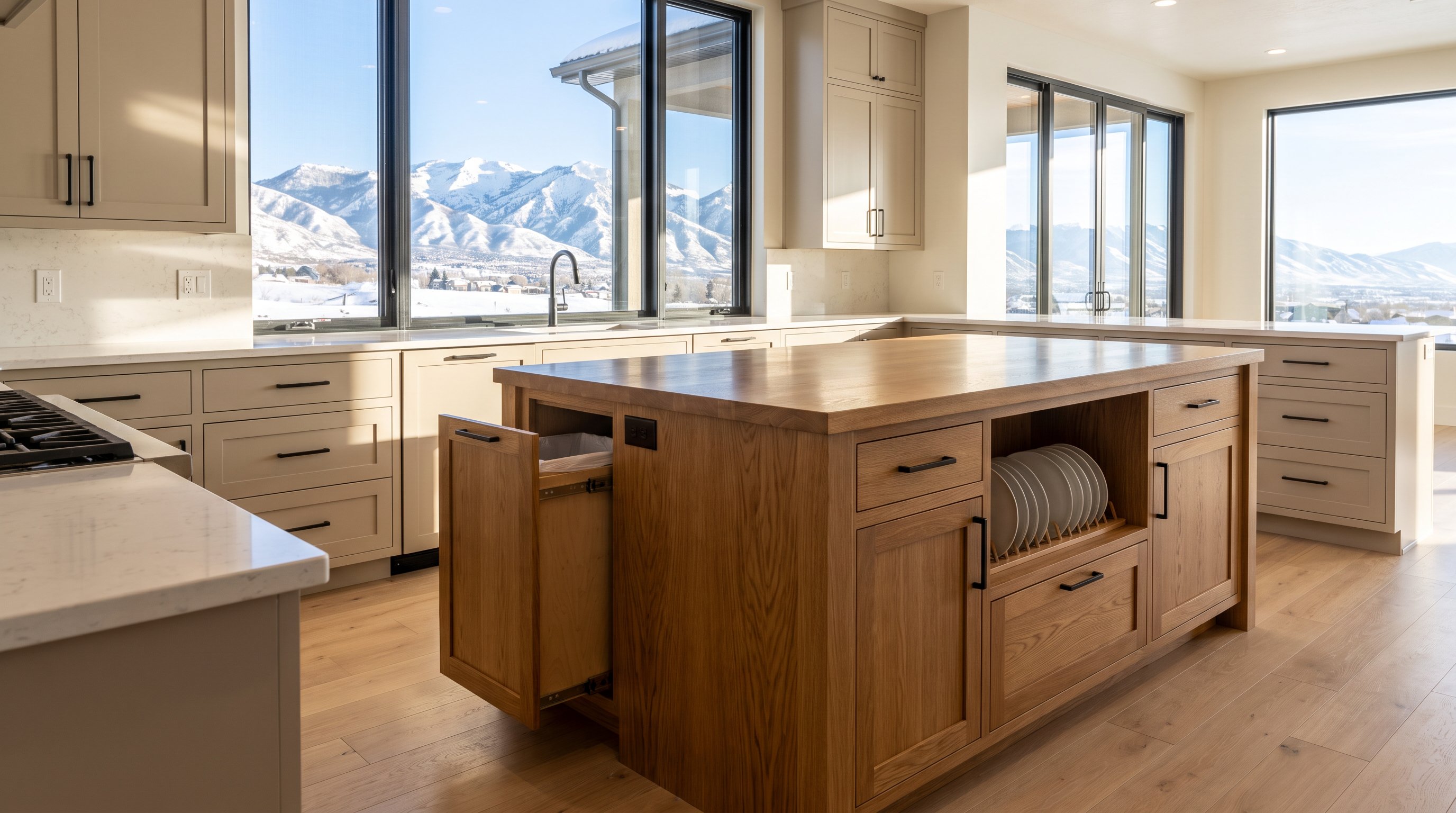
Open a cabinet door in January along the Wasatch Front and you can sometimes hear the house talking back, a faint creak, a tiny shift, wood adjusting to air that feels almost paper-dry. That same low humidity that gives Utah its clear winters can punish the wrong cabinet finish, especially on painted doors and wide solid-wood panels. We build for that reality every day, and the finish that looks great in a showroom isn't always the one that still looks sharp after a few Utah seasons.
Why Utah’s Climate Is Hard On Cabinet Finishes
Utah's climate is hard on cabinet finishes because dry air pulls moisture from wood, which makes parts shrink, joints move, and brittle coatings show stress sooner.
In many Utah homes, indoor humidity drops hard during winter when furnaces run nonstop. Wood is hygroscopic, which means it takes on and releases moisture from the air around it. When humidity falls, rails, stiles, and center panels can contract. The finish sitting on top has to flex with that movement. If it can't, you start seeing hairline cracks at joints, paint splits at panel seams, or small chips that spread over time.
Painted cabinets usually show the problem first. A stained finish can hide small seasonal movement because the grain pattern already gives the eye some variation. Paint is less forgiving. On a bright white shaker door, a thin crack at a corner joint stands out right away.
That's why we push clients to think about finish and substrate together, not as separate choices. In our work on custom cabinets in Utah, we also account for layout, storage use, and local climate from the start, because Utah cabinetry has to perform, not just photograph well.
The Best Cabinet Finishes For Low-Humidity Homes
The best cabinet finishes for low-humidity homes are conversion varnish for stained wood and catalyzed systems for painted cabinetry built with stable panel materials. They hold up better because they cure into tougher films and resist household wear while tolerating seasonal change better than cheaper coatings.
Conversion Varnish
Conversion varnish is one of the best choices for stained or clear-finished cabinets in Utah because it creates a hard, durable coating with strong resistance to moisture swings, cleaners, and abrasion.
We like it on species where homeowners want the wood to do the talking, especially white oak, walnut, and higher-grade maple. It gives depth without that heavy plastic look some older finishes had. More important, it performs well in busy kitchens where cabinet doors get grabbed with damp hands, wiped often, and exposed to cooking residue.
It isn't magic. If the door is poorly built, the finish can't fix that. But when paired with solid joinery and properly acclimated wood, conversion varnish lasts. For homeowners weighing species and budget, our guide to custom wood cabinets breaks down where premium woods make sense and where they don't.
Catalyzed Lacquer And High-Quality Painted Finishes
Catalyzed lacquer and other high-quality painted finish systems work best in Utah when the door itself is engineered to reduce movement. That's the piece many shops skip.
For painted cabinets, we heavily favor HDF center panels over solid-wood center panels. HDF stays more dimensionally stable, so the paint film isn't constantly bridging seasonal expansion and contraction. That one material choice prevents a lot of the cracked panel lines homeowners assume are "just normal." Some movement at joints can still happen over the years, but the failure rate drops when the panel is stable.
This matters even more in popular 2026 looks like two-tone kitchens, deep greens, charcoal, and navy, where every flaw catches light. In many Utah kitchen cabinet projects, painted perimeter cabinets look best long-term when we pair catalyzed finishes with stable cores, careful prep, and controlled shop spraying.
Finishes That Tend To Fail Faster In Dry Conditions
Finishes that fail faster in dry conditions are usually lower-cost paints, thin lacquers, and field-applied coatings that don't build enough flexibility or durability for Utah's seasonal stress.
The common weak point is not just the product label. It's the whole system: low-grade primer, rushed sanding, thin topcoats, and doors made from moving parts that shouldn't sit under paint. When that stack is weak, Utah exposes it fast.
We see problems most often with stock or budget remodels where painted shaker doors use solid wood center panels and basic factory paint. They may look fine at install, then show cracking at the panel edge after one or two winters. That's frustrating because homeowners assume all painted cabinets behave that way. They don't.
We're also cautious with finishes applied on-site. Dust, temperature swings, and cure-time shortcuts can leave a softer film that nicks sooner around pulls and drawer fronts. If budget is a concern, it's often smarter to simplify door style or mix materials than to cut the finish package. Homeowners comparing options across Utah County cabinets run into this tradeoff all the time: cheaper now can mean repainting sooner.
How Wood Species And Construction Affect Finish Durability
Wood species and construction affect finish durability because the substrate moves first and the finish reacts second. If the cabinet door is unstable, even a premium coating is working uphill.
Maple remains common because it paints and stains well at a reasonable price, but standard maple doors in dry homes still need sound construction. Rift-sawn white oak is more stable than many homeowners expect and works especially well under stain, where its movement is less visually punishing than under paint. Walnut is beautiful, though it usually sits in a higher budget tier.
Door design matters too. Wide rails, oversized panels, and poorly dried lumber increase risk. For painted kitchens, HDF or MDF components in the right places help keep faces flatter and paint lines cleaner. For stained kitchens, properly milled hardwood with room for seasonal movement does better than trying to force a rigid look onto a moving material.
Construction inside the box also matters. Deep drawer banks usually outperform lower-door cabinets in daily life because they reduce slamming, improve access, and carry loads better when paired with heavy-duty hardware. We use that thinking across many Salt Lake custom cabinets, often adding plate organizers, knife blocks, and hidden trash pull-outs that make the finish last longer simply because the cabinetry gets used more cleanly.
And in Utah, build quality isn't just cosmetic. Heavy uppers should be anchored into framing with real intent, especially in earthquake country. A finish lasts longer when the cabinet itself stays square, stable, and firmly installed. That's part of what separates careful cabinet makers in Salt Lake City from shops that just hang boxes and move on.
How To Help Your Cabinets Last Longer Year-Round
The best way to help cabinets last longer year-round is to control indoor humidity, clean finishes gently, and choose the right finish-and-material combination before the project starts.
Start with humidity. If your home drops into very low relative humidity each winter, a whole-home humidifier can reduce stress on woodwork throughout the house. You don't need tropical air: you just want to avoid the sharp swings that open joints and shrink panels. Even modest stabilization helps.
Daily care matters more than most people think. Use a soft cloth and mild cleaner. Avoid soaking door edges, harsh degreasers, and abrasive pads. The spots that fail first are usually around handles, sink bases, and trash pull-outs because they get the most contact.
Planning matters just as much as maintenance. If you want painted cabinets, choose a shop that uses stable panel construction and catalyzed finishes. If you want natural wood, ask which species and topcoat are best for your room's light, use, and budget. Homeowners in fast-growing areas often compare local options through Saratoga Springs cabinet makers because craftsmanship, not just door color, decides what still looks good five winters from now.
When we design kitchens, we also try to reduce abuse points. More drawers, better storage zones, integrated pull-outs, and realistic traffic flow keep people from yanking on the same doors all day. A durable finish helps, but smart design helps just as much.
If you're remodeling in 2026, the right question isn't "What finish is trendy?" It's what finish matches Utah's dry air, your cabinet style, and the way your family actually lives. That's how you get cabinets that still feel solid and look clean long after install day.
Frequently Asked Questions About Cabinet Finishes in Utah's Dry Climate
Why do cabinet finishes crack or chip faster in Utah's dry air?
Utah's low humidity pulls moisture from wood, causing wood parts to shrink and move. Brittle coatings then crack or chip as they can't flex with this movement, especially on painted surfaces with solid wood panels.
What are the best cabinet finishes for homes with dry air like Utah's?
Conversion varnish for stained wood and catalyzed lacquer for painted cabinets are ideal. These finishes create tougher films that resist moisture swings and household wear, maintaining durability in Utah's dry climate.
How does cabinet construction impact finish durability in a dry climate?
Stable panel materials like High-Density Fiberboard (HDF) for painted cabinets reduce seasonal movement, preventing paint cracks. Proper joinery and acclimated wood also enhance finish longevity by minimizing stress on coatings.
Can indoor humidity control help preserve my cabinet finishes in Utah?
Yes, maintaining consistent indoor humidity with a whole-home humidifier can reduce wood movement, lessening stress on finishes and helping cabinets last longer despite Utah's dry winters.
Why are HDF center panels recommended for painted cabinets in Utah?
HDF center panels are dimensionally stable and resist expansion and contraction, preventing paint from cracking at joints and panel seams, a common issue with solid wood center panels in Utah's dry climate.
What wood species and door designs work best for cabinet finishes in Utah's climate?
Rift-sawn white oak and walnut perform well, especially with stains that hide movement better than paint. Door designs with narrower rails and engineered stable cores help maintain finish integrity through seasonal changes.