Cabinet Refacing Vs. Replacing: How To Choose The Best Kitchen Upgrade For Your Home In 2026
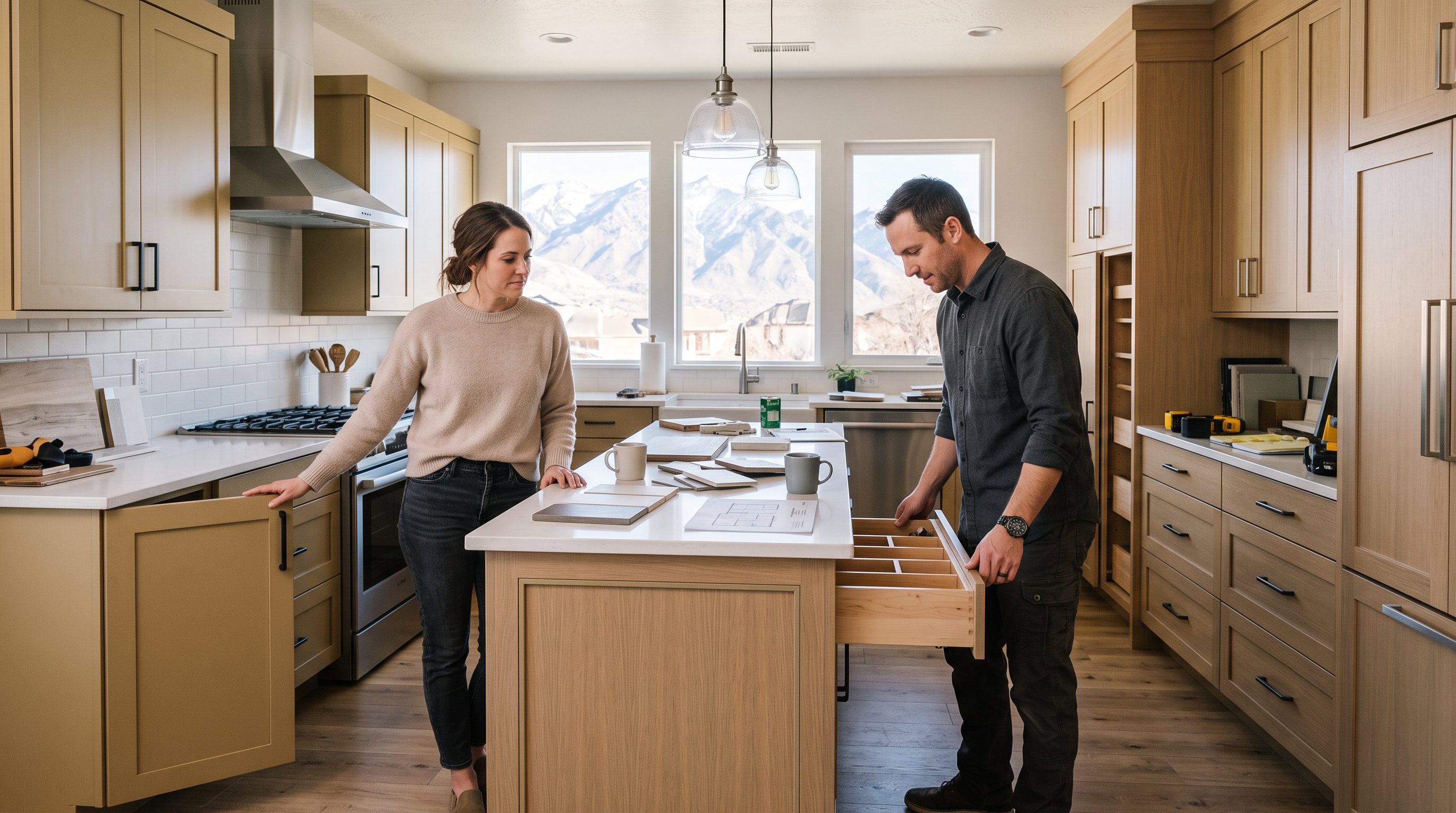
A kitchen update doesn't always require a full gut remodel, but sometimes it absolutely does. For Utah homeowners, the real question is whether cabinet refacing vs. replacing will give you the best mix of cost, function, and long-term value. We walk clients through this choice all the time, and the right answer usually comes down to what's happening behind the doors as much as what you see on the outside. If your goal is a smarter, better-looking kitchen in 2026, here's how we evaluate both options without the fluff, the guesswork, or the one-size-fits-all advice.
What Cabinet Refacing And Cabinet Replacing Actually Mean
Cabinet refacing is essentially a facelift. We keep the existing cabinet boxes if they're structurally sound, then replace the doors, drawer fronts, hardware, and visible exterior surfaces with updated materials and finishes. That means you can go from dated oak to a clean painted shaker look, or even a more modern slab style, without tearing out the whole kitchen.
Cabinet replacing is a full restart. We remove the old cabinetry and install new cabinets, whether that's semi-custom or fully custom cabinetry built to your space. Replacing opens the door to changing cabinet sizes, improving storage, reworking awkward corners, adding deep drawer banks, and making the kitchen function better overall.
The biggest misconception? People assume refacing and replacing are just cosmetic vs. expensive. In reality, the decision is more practical than that. Refacing works when the bones are good and the layout still serves you. Replacing makes sense when the kitchen's structure, storage, or flow is fighting you every day.
The Biggest Differences In Cost, Timeline, And Disruption
For most homeowners, this is where the decision gets real.
Refacing usually costs less because we're not rebuilding the entire cabinet system. Labor is lighter, demolition is limited, and you're not paying for all-new boxes. If you like your current layout and just want a fresh look, that can be a smart use of your budget.
Replacing costs more, but it gives you much more. Price depends on cabinet grade, wood species, finish, hardware, and scope. A simple rip-and-replace, keeping the sink, appliances, and plumbing where they are, is far more budget-friendly than moving gas lines, electrical, or walls. Upgrades to the "guts" of the cabinets, like pull-out spice racks, Le Mans corner systems, hidden trash pull-outs, and heavy-duty soft-close hardware, also raise the investment.
Timeline matters too. A full kitchen remodel typically lands in the 4-to-8-week range from demo to countertops and backsplash, depending on complexity. Refacing is often quicker and less disruptive. Replacing means more demolition, more trades, and more dust, though with proper zip-wall barriers, HEPA air scrubbers, and scheduling, the process can still be managed well.
In short: refacing is usually easier on the budget and your daily routine, while replacing gives you the chance to fix deeper problems instead of simply covering them.
When Refacing Is The Smarter Choice
Refacing is often the right answer when your kitchen works fine but looks tired. If the cabinet boxes are solid, the layout is functional, and you don't need dramatically better storage, refacing can deliver a major visual upgrade without the cost of a full replacement.
This is especially appealing for homeowners who want a cleaner, more current design but don't want to tear apart the heart of the home. Maybe the orange-toned wood dates the kitchen. Maybe the door style feels stuck in 2004. Maybe the hardware is worn out and the finish has seen better days. Those are good refacing problems.
It can also make sense if you're planning to upgrade counters, backsplash, paint, or flooring installation and want the cabinets to match the new look without resetting the entire room. We've seen refacing work well in homes where the layout was already strong and the owners simply wanted a more timeless finish.
The catch: refacing improves appearance far more than function. If your lower cabinets are frustrating, your corners are wasted, or you're dreaming about custom storage, refacing may only solve half the problem.
Signs Your Existing Cabinet Boxes Are Worth Keeping
Signs Your Existing Cabinet Boxes Are Worth Keeping
A cabinet box is worth saving when it's level, sturdy, and free from water damage, sagging shelves, or failing joints. If the boxes are still doing their job well, keeping them can be financially smart.
A few green flags we look for:
- The layout already works for how your family cooks and gathers
- The cabinet interiors are in good condition
- Drawers and doors line up well, even if they look dated
- There's no major swelling around the sink base or dishwasher area
- You don't need larger islands, taller uppers, or specialty storage
In Utah, material stability matters too. Dry winters can expose weak construction fast. If older cabinet boxes have held up well through the Wasatch Front climate, that's a good sign. But we still inspect carefully. Cosmetic updates only make sense when the underlying structure is solid enough to support them for years.
When Replacing Makes More Sense For Your Kitchen
Cabinet replacing is the better move when the kitchen doesn't function the way you need it to. If you're constantly fighting blind corners, shallow shelves, limited drawers, or a cramped prep zone, new cabinetry lets us solve the actual problem, not just change the color.
Replacement is also the right choice when cabinet boxes are damaged, poorly built, or simply past their useful life. Water damage near sinks, warped panels, failing drawer systems, and low-quality materials are all signs that refacing would be a short-term patch.
And then there's style. If you want a dramatic transformation, say, a larger island, floor-to-ceiling pantry storage, a hidden appliance garage, integrated lighting, or a two-tone kitchen with a Rift-Sawn White Oak island, replacement gives you real design freedom. This is where custom cabinets in Utah shine, because they can be built to the exact millimeter of your space instead of forcing your kitchen into stock sizes.
For many families, replacing isn't about luxury. It's about making the kitchen finally work like the central hub it's supposed to be.
How Layout Changes, Storage Needs, And Customization Affect The Decision
How Layout Changes, Storage Needs, And Customization Affect The Decision
This is usually the tipping point.
If you want to keep everything in the same place, a rip-and-replace is simpler and more affordable than a full layout redesign. But if you want to move the sink, shift appliances, add a bigger island, or create better traffic flow, cabinet replacement becomes almost unavoidable because the whole system needs to be re-engineered.
Storage upgrades matter just as much. Many homeowners start by thinking they want a new look, then realize what they really want is better daily usability. Deep drawer banks for pots and pans, custom drawer organization, pull-out spice storage, hidden trash and recycling, and corner solutions like Le Mans pull-outs are hard to achieve meaningfully through refacing alone.
Customization also affects long-term satisfaction. Built-to-order cabinetry can include appliance garages, coffee bars, hidden walk-in pantries, and reinforced islands designed for Utah families who actually use the kitchen hard. If the goal is a kitchen tailored to your routines, not just prettier doors, replacement offers a completely different level of value.
How To Decide What Is Right For Your Budget, Goals, And Long-Term Value
Start with three questions: Do we like the current layout? Are the cabinet boxes truly in good shape? And do we want a cosmetic upgrade or a functional one?
If your layout works, your boxes are solid, and your main complaint is style, refacing can be the smart, efficient answer. If your kitchen feels undersized, inefficient, dated in function, or structurally worn out, replacement usually delivers better value over time.
We also encourage homeowners to think beyond the initial number on the quote. The cheapest path isn't always the best investment if you'll still be annoyed by poor storage six months later. On the other hand, not every kitchen needs a full custom overhaul. Sometimes a realistic, well-planned update is the win.
For Utah homes, long-term durability matters. Materials and finishes need to hold up in a dry climate, and installation needs to be done right. That's why we prefer transparent planning, itemized estimates, and 3D renderings before work begins. Seeing the design clearly helps you spend intentionally.
At Caliber Cabinets, we guide homeowners through both custom kitchen remodeling and more budget-conscious cabinet solutions with the same goal: build a kitchen that looks right, works hard, and still feels worth it years from now.
If you're deciding between cabinet refacing vs. replacing, the best choice is the one that solves the problems you actually have, not just the ones you can see at first glance.