Countertop Fabricators Near Me: How Utah Homeowners Can Choose The Right Pro In 2026
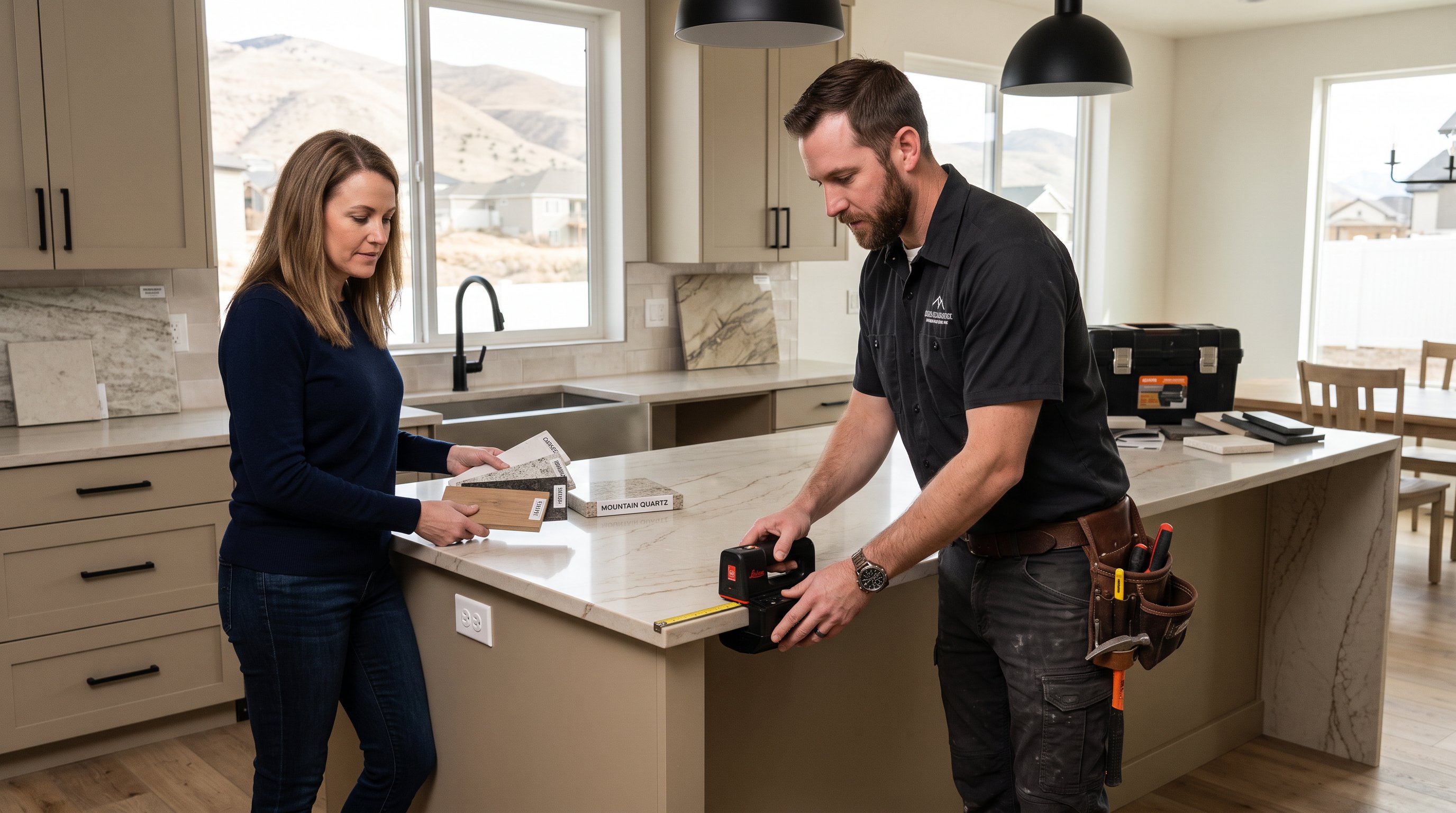
Search for countertop fabricators near me and you'll get a flood of options, big-box referrals, independent shops, and full-service remodelers all claiming they do the same thing. They don't. In Utah, where dry air, busy family kitchens, and custom layouts all affect the final result, choosing the right fabricator matters more than most homeowners expect. We've seen great counters elevate an entire remodel, and we've also seen rushed installs create expensive headaches. Here's how we recommend narrowing the field, comparing materials, and knowing what to expect before you sign a quote in 2026.
What A Countertop Fabricator Actually Does
A countertop fabricator does far more than cut a slab and drop it in place. The job usually includes measuring the space precisely, creating templates, helping confirm edge profiles and sink cutouts, fabricating the material, polishing finished edges, and coordinating installation.
That matters because even a beautiful quartz or granite slab can look wrong if the seams are poorly placed or the overhangs aren't supported correctly. Good fabricators think through function as much as appearance, where the cooktop sits, how the waterfall edge lands, whether your backsplash should be full-height, and how the counters tie into cabinets.
In many Utah remodels, the best experience comes when the countertop work is coordinated with cabinetry and layout planning. At Caliber Cabinets, for example, we build around the reality that islands, hood vents, lighting, and storage all need to work together. That kind of planning reduces surprises and gives homeowners a cleaner final fit.
How To Find Reliable Local Countertop Fabricators Near You
When we look for reliable local countertop fabricators, we start with a few basics: licensing, insurance, recent local work, and clear communication. A polished Instagram feed is nice. A dependable process is better.
Here's what we suggest checking first:
- Local project experience: Ask whether they regularly serve your area, whether that's Salt Lake County, Utah County, or custom builds in Park City.
- Material specialization: Some shops are excellent with quartz but less experienced with marble or wood tops.
- Installation coordination: Fabricators should work smoothly with cabinet installers, plumbers, and tile crews.
- Reviews with specifics: Look for comments about punctuality, seam quality, cleanup, and how issues were handled.
If you're planning a larger kitchen remodel, it often helps to work with a contractor or design-build team that already has trusted countertop partners. That usually means fewer scheduling gaps and less finger-pointing if something's off. We'd also favor companies that offer in-home consultations and realistic design previews, because seeing the countertop next to cabinetry and lighting choices can save you from an expensive "looked better in the showroom" moment.
Questions To Ask Before You Request A Quote
Before you request a quote, ask sharper questions than "What's your price per square foot?" That number rarely tells the full story.
Start with these:
- Who handles templating and installation, employees or subcontractors?
- How do you price cutouts, edge profiles, backsplashes, waterfalls, and seam work?
- What material brands or slab suppliers do you use?
- How long is the timeline from template to install?
- What happens if a slab arrives damaged or a measurement needs to be revised?
- Do you provide itemized estimates?
We also recommend asking how they handle site conditions. Are cabinets required to be fully installed first? Who verifies they're level? If you're remodeling an older Utah home, small framing inconsistencies can affect the fit.
And don't underestimate communication. One of the biggest homeowner complaints during remodels isn't the stone, it's not knowing when people are showing up. A fabricator or remodeler who gives a clear schedule and weekly updates is worth serious consideration.
Material Options To Compare For Your Kitchen Or Bathroom
The right countertop material depends on how you live, not just what looks best in a sample rack. A bathroom vanity has different demands than a high-traffic family kitchen with kids doing assignments at the island and someone always setting down a hot pan.
In 2026, most Utah homeowners are comparing durability, maintenance, price, and visual style all at once. Quartz remains popular because it's low-maintenance and consistent. Natural stone still wins homeowners over with movement and one-of-a-kind character. Wood adds warmth, but it asks more from you.
We usually advise clients to compare materials in the actual context of the room: cabinet color, lighting, floor tone, backsplash plans, and how much daily wear the space will take. That's one reason 3D renderings and in-home consultations are useful, they help you judge the whole room, not just the slab sample in isolation.
Granite, Quartz, Marble, And Butcher Block
Granite is durable, heat-resistant, and naturally varied. It's a strong fit for busy kitchens where homeowners want real stone without babying it too much.
Quartz is engineered, non-porous, and easier to maintain. It's one of the safest bets for families who want clean lines and predictable patterning.
Marble is gorgeous, no getting around it, but softer and more prone to etching. We'd usually recommend it for lower-abuse spaces or for homeowners who love patina and accept the tradeoff.
Butcher block brings warmth that stone can't. It works especially well for accent areas, coffee bars, or islands, but Utah's dry climate means wood movement is real. It needs proper sealing and ongoing care.
If you're pairing countertops with custom cabinets Utah homeowners often choose in 2026, like white oak, painted HDF, or moody two-tone designs, the countertop should complement both the style and the maintenance level you're comfortable with.
Templating, Fabrication, And Installation: What To Expect
Once cabinets are installed and secured, the countertop process usually moves into three stages: templating, fabrication, and installation.
Templating is where exact measurements are taken, often digitally. This step confirms sink placement, overhangs, appliance clearances, and seam locations. If you're doing a full remodel, this usually happens only after the base cabinets are set and level.
Fabrication is the shop phase. The slab is cut, polished, finished, and prepped for transport. Depending on the material and project complexity, this can take days or a couple of weeks.
Installation is fast compared to everything before it, but it's the moment precision really shows. Installers set the pieces, align seams, secure sink cutouts, and confirm the fit against walls and cabinetry. After that, plumbers reconnect fixtures, and backsplash work may follow.
For many Utah remodels, the full kitchen timeline lands around 4 to 8 weeks from demo to final countertop and backsplash completion, depending on scope. A simple rip-and-replace moves faster. A layout change with plumbing and electrical? Different story. The smoother the cabinet and countertop teams coordinate, the smoother this phase feels.
Conclusion
Finding the best countertop fabricators near me isn't really about finding the cheapest slab cutter, it's about finding a pro who measures accurately, communicates clearly, and fits your remodel goals. For Utah homeowners, the right choice is usually the team that understands cabinetry, layout, material performance, and scheduling together. Get detailed quotes, ask better questions, and choose craftsmanship over shortcuts.