Kitchen Cabinet Installers In Utah County: How To Choose The Right Team For A Smooth, High-Quality Remodel In 2026
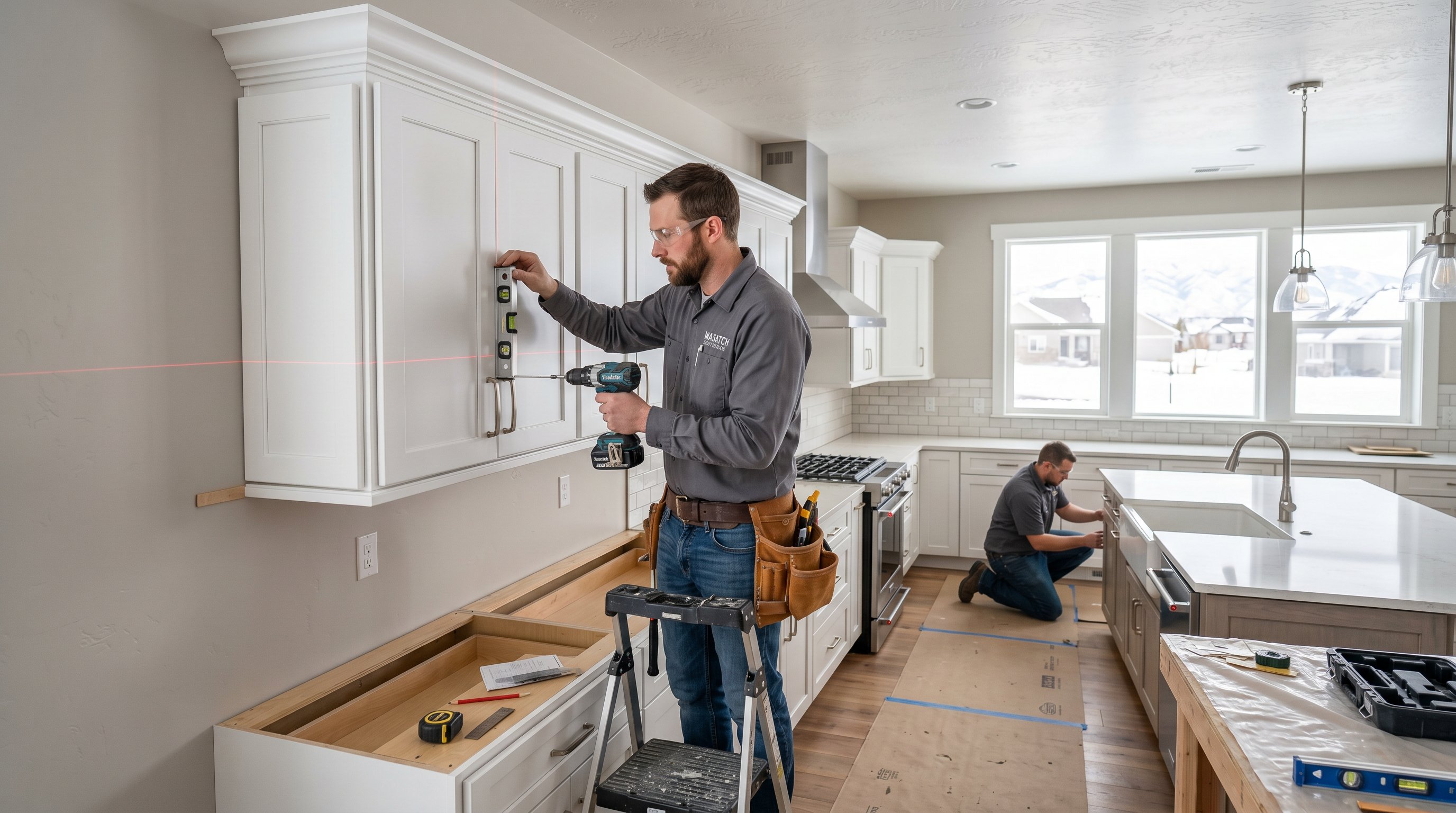
Choosing kitchen cabinet installers in Utah County isn't just about finding someone who can level a few boxes and run a screw into the wall. The right team affects how your kitchen looks, how it functions, and how well it holds up in Utah's dry climate over time. We've seen homeowners in Lehi, Orem, Provo, and surrounding areas save money and stress simply by asking better questions before hiring. If you're planning a kitchen upgrade in 2026, here's how to spot real craftsmanship, understand pricing, and choose an installer who can deliver a remodel that feels polished from day one.
What Kitchen Cabinet Installers In Utah County Actually Do
Kitchen cabinet installers do much more than mount cabinets to the wall. A quality installer handles layout verification, checks that floors and walls are square, plans around plumbing and electrical, and makes sure every cabinet line is level, plumb, and properly anchored.
In Utah County, that last part matters. Because of our local building conditions and the reality of seismic movement along the Wasatch Front, upper cabinets need solid attachment into structural framing, not guesswork. Good installers also understand how Utah's zero-humidity winters can affect materials, finishes, and door stability.
On a full remodel, the installation team may coordinate with designers, countertop fabricators, flooring crews, and electricians so the project flows correctly. At Caliber Cabinets, for example, installation is part of a larger process that can include 3D renderings, custom cabinet design, and finish selections. That kind of coordination reduces the classic remodel headache: one trade blaming another while your kitchen sits half-done.
Signs You Have Found A Quality Cabinet Installation Team
The best cabinet installers tend to show their quality before the first cabinet arrives.
First, they communicate clearly. You should know the schedule, what happens before installation day, and what could affect timing. If a company is vague during the estimate stage, it usually gets worse once the project starts.
Second, they give detailed, itemized pricing instead of a suspiciously fast ballpark number. Transparent quotes usually signal a more professional operation.
Third, they talk about details that many homeowners don't think to ask about, such as:
- Dust control during demolition and installation
- Material recommendations for Utah's dry climate
- Cabinet anchoring and reinforcement
- Filler strips, crown alignment, and reveal consistency
- Coordination with countertops and backsplash
You should also look for licensed and insured contractors with a strong local portfolio. Photos are helpful, but finished kitchens in homes similar to yours are even better. A real pro can explain why one layout works better for a busy family, not just why it looks nice in a photo.
Questions To Ask Before Hiring A Cabinet Installer
Before signing anything, we recommend asking a few direct questions.
Are you licensed and insured in Utah?
This is basic, but it matters. It protects you if something goes wrong and signals that the company operates professionally.
Do you handle design, installation, and project coordination?
Some installers only do the labor. Others manage the bigger picture. If you're remodeling the whole kitchen, integrated coordination usually creates a smoother result.
What cabinet types do you install most often?
An installer experienced with custom cabinets, semi-custom lines, and refacing can give more practical guidance based on your budget.
How do you handle Utah-specific material issues?
Painted cabinets, wood movement, and finish durability are real concerns here. Experienced local teams should be able to explain why they recommend certain materials, such as HDF center panels for painted doors.
What is your estimated timeline?
For many Utah County kitchen remodels, 4 to 8 weeks is a realistic range depending on scope, layout changes, and countertop lead times.
Custom Vs. Prefab Cabinets: What Makes Sense For Your Kitchen
This is where budget, layout, and lifestyle all collide.
Custom cabinets make the most sense when your kitchen has awkward dimensions, you want premium storage features, or you're trying to create a specific look that stock sizes can't achieve. They're also ideal if you want upgrades like deep drawer banks, hidden trash pull-outs, appliance garages, integrated lighting, or a large family island built around your exact space.
Prefab or stock cabinets can work well for straightforward kitchens where cost control is the top priority. They're faster to source and usually less expensive up front, but they often require more fillers and compromises.
Semi-custom is often the middle ground. It gives homeowners better sizing, finish options, and function without the full cost of fully bespoke cabinetry.
For many Utah County homeowners, the right answer isn't "most expensive wins." It's choosing the cabinet system that fits how your family actually cooks, stores, entertains, and lives. That's where experienced guidance really pays off.
What To Expect During The Cabinet Installation Process
A professional cabinet installation process should feel organized, not chaotic.
It usually starts with a final site measure and plan review. That confirms dimensions, appliance specs, and layout details before materials are built or delivered. If you're doing a full remodel, demo comes next, followed by any framing, plumbing, electrical, or flooring prep required before cabinetry goes in.
During installation, base cabinets are typically set and leveled first, then wall cabinets, trim details, hardware, and accessory components. The best installers pay attention to the small stuff: even reveals, straight crown lines, clean scribe work, and doors that don't drift or rub.
After cabinets are installed, countertops are templated and fabricated. Then the final phase includes backsplash, punch-list corrections, and finishing touches.
On well-run projects, dust control is also part of the process. Heavy-duty barriers and HEPA filtration can make a huge difference, especially if you're living in the home during the remodel. That's not glamorous, but homeowners remember it.
How Pricing Works For Kitchen Cabinet Installation In Utah County
Kitchen cabinet installation pricing in Utah County depends on more than cabinet count. The biggest cost drivers usually include the scope of the remodel, cabinet grade, material selection, and how much customization is involved.
A simple rip-and-replace kitchen costs less because the sink, appliances, gas, and electrical stay in place. Once you start moving walls or relocating plumbing, the budget changes quickly.
Cabinet type matters too. High-quality semi-custom cabinets are often a smart value option, while fully custom cabinetry costs more because it's built to your space down to the millimeter. Finish choices also affect price. Painted MDF or maple is generally more budget-friendly than premium white oak or walnut.
Then there are the "guts" of the kitchen: pull-out organizers, soft-close hardware, drawer banks, spice storage, hidden trash systems, and specialty corner hardware. These upgrades add cost, but they often improve day-to-day usability more than homeowners expect.
The best installers provide clear, itemized estimates. If a quote feels vague, it probably is.
Conclusion
The best kitchen cabinet installers in Utah County combine craftsmanship, planning, and honest communication. If you're investing in a remodel in 2026, don't just compare price tags. Compare process, materials, and local expertise too. A team that understands Utah homes, family-friendly design, and precise installation will usually save you money, frustration, and second-guessing in the long run.