Kitchen Cabinet Pulls Vs. Knobs: How To Choose The Right Hardware For Your Kitchen In 2026
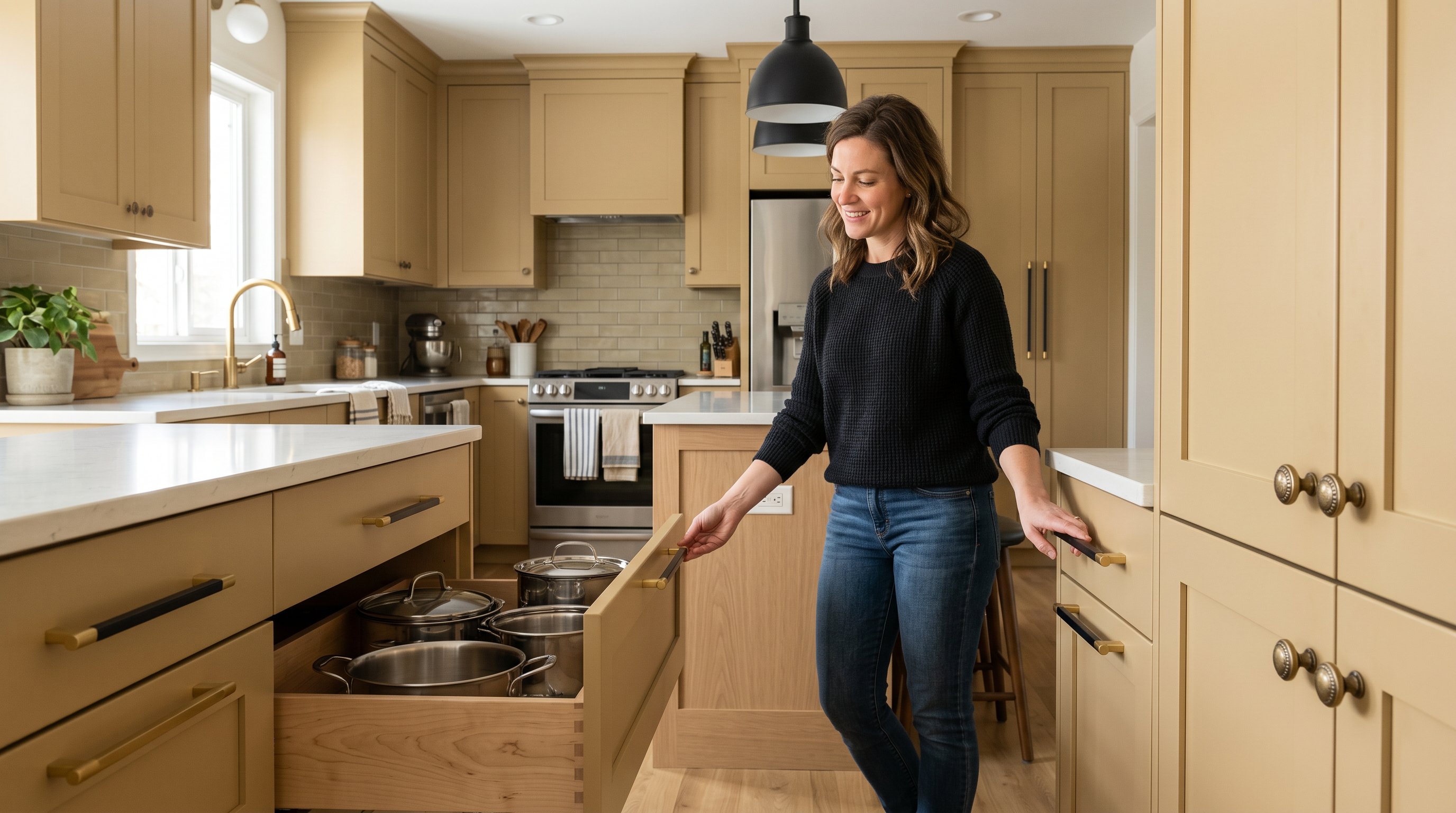
Choosing between kitchen cabinet pulls knobs sounds minor, right up until you use them 30 times a day. Then it becomes obvious: hardware affects comfort, cleaning, durability, and the overall look of your kitchen more than most homeowners expect. For Utah families planning a remodel, that decision matters even more because the right hardware has to work hard in a busy space and still look sharp for years. In this guide, we'll break down the real differences between pulls and knobs, where each works best, and how to choose hardware that fits your kitchen, your budget, and your daily routine.
Why Cabinet Hardware Matters More Than Most Homeowners Expect
Cabinet hardware is one of those details people often save for the end. We get it, when you're thinking about layout changes, custom cabinets Utah homeowners actually need, countertops, lighting, and installation, knobs can feel like a footnote. But they're not.
Hardware is the part of the kitchen you physically touch every single day. If it feels awkward, too small, hard to grip, or constantly shows fingerprints, you'll notice. Fast. A well-chosen pull or knob improves function in ways that aren't glamorous but absolutely matter: easier drawer access, smoother movement, less strain on wrists, and better leverage on heavier cabinet fronts.
It also has a big visual job. Hardware acts like jewelry for cabinetry. The wrong size or finish can make a high-end kitchen feel unfinished, while the right choice ties everything together. In custom kitchen remodeling, we usually tell homeowners that hardware is small in scale but big in impact. And in 2026, when clean lines and practical storage upgrades are driving design, that impact is only getting bigger.
Kitchen Cabinet Pulls Vs. Knobs: The Key Differences To Know
The biggest difference is simple: pulls are typically longer and require two attachment points, while knobs are smaller and attach at one point.
Pulls usually feel more modern, practical, and easier to grab. They give you more surface area, which matters on deep drawer banks, hidden trash pull-outs, and heavier lower storage. If your remodel includes smart storage features, like spice pull-outs or oversized drawers for plates and cookware, pulls often make daily use easier.
Knobs, on the other hand, tend to feel more classic and understated. They're often less expensive, which can help if you're updating a large kitchen and watching costs. They also work well in traditional, transitional, cottage, and shaker-style kitchens.
There's also a cleaning and wear angle. Pulls can be easier to use with wet or messy hands because you can hook your fingers around them. Knobs are simple, but they can feel less convenient on heavy drawers. Neither is universally better. The right answer depends on where the hardware goes, how often you use that cabinet, and the style you want your kitchen cabinet installation to communicate.
How To Choose The Best Option For Doors, Drawers, And Daily Use
A good rule: use knobs for doors and pulls for drawers if you want a balanced, timeless look. That combination still works beautifully in 2026.
For drawers, especially deep lower drawers, pulls are usually the better choice. They're easier to grip and distribute force more naturally when you're opening something loaded with pots, pans, or dishes. We often recommend deep drawer banks instead of standard lower cabinet doors because they dramatically improve kitchen workflow, and once you make that upgrade, pulls usually make the most sense.
For upper cabinet doors, knobs can work well because those doors are lighter and opened less aggressively. But long vertical pulls on pantry cabinets or tall appliance garage doors can look cleaner and feel more ergonomic.
Daily use matters too. If someone in the home has arthritis, limited hand strength, or just wants a more comfortable kitchen, pulls generally win. They're easier to catch without pinching. Busy family kitchens also benefit from hardware that's forgiving when your hands are full. If you're carrying a casserole dish and nudging open a trash pull-out with your wrist, this suddenly isn't a theoretical design choice anymore.
What To Consider Before You Buy
Before you order anything, think beyond looks.
First, consider cabinet size and weight. Heavy drawers, wide pantry pull-outs, and integrated storage accessories need hardware that feels substantial enough to operate smoothly. Tiny knobs on oversized drawers usually look off and function worse.
Second, think about budget. Knobs are often more affordable than pulls, especially across a full kitchen. If you're balancing costs between cabinetry, custom countertops Utah homeowners want, and flooring installation Utah projects may include, hardware can be a smart place to mix styles rather than overspend. For example, pulls on drawers and knobs on doors often keeps the budget in check.
Third, think about quality. Cheap hardware loosens, chips, and feels hollow. In a dry Utah climate, your cabinetry materials matter, but so does the durability of every touchpoint. Good hardware should feel solid, have a reliable finish, and stand up to years of use.
Finally, order samples. Seriously. What looks perfect online can feel too sharp, too small, or strangely shiny in person. We always prefer seeing hardware next to actual door colors, countertops, and lighting before making the final call.
Style And Finish: Matching Hardware To Your Kitchen Design
This is where function meets personality.
For modern kitchens, streamlined bar pulls, edge pulls, or simple tab pulls often fit best. In transitional kitchens, a mix of soft curves and clean lines usually feels right. Traditional spaces often pair nicely with round knobs, cup pulls, or more decorative shapes.
Finish matters just as much. Matte black is still strong in 2026, but it's no longer the automatic default. We're seeing more warm metallics, brushed nickel, antique brass, and mixed-finish kitchens, especially in two-tone cabinetry. A natural white oak island with painted perimeter cabinets, for example, can look excellent with warmer hardware that adds contrast without feeling flashy.
The key is coordination, not perfect matching. Your hardware should relate to your faucet, lighting, and appliances, but it doesn't have to be identical. In fact, a little variation often feels more custom.
For Utah homeowners investing in cabinet design Utah projects, we usually encourage looking at hardware in the full room context. With 3D renderings, you can see whether a finish sharpens the design or quietly disappears. That's a much better test than staring at a two-inch sample in isolation.
Common Hardware Mistakes To Avoid
The most common mistake? Choosing hardware too late.
Hardware should be part of the design plan early, not an afterthought once the cabinets are already ordered. Hole spacing, proportion, and style all affect the final look.
Another mistake is picking hardware that's too small. Undersized knobs or short pulls on large drawers can make beautiful cabinets feel awkward and cheap. Proportion matters more than people expect.
We also see homeowners focus only on appearance and ignore comfort. A sharp-edged pull may look sleek in photos but feel annoying every day. Test how it feels in your hand.
And don't overlook kitchen-specific practicality. Highly polished finishes can show fingerprints quickly. Delicate shapes may snag clothing. Trendy pieces can age faster than classic ones.
Finally, avoid mismatching the hardware to the way your kitchen actually functions. If you're building a hardworking family kitchen with heavy-duty soft-close drawers, hidden recycling pull-outs, and oversized islands, your hardware should support that level of use. Pretty is good. Pretty and practical is better.
Conclusion
The best choice in the kitchen cabinet pulls knobs debate isn't about following a trend, it's about matching hardware to how your kitchen lives. Pulls usually offer more comfort and function: knobs can bring simplicity and savings. If you're planning a Utah remodel, we recommend choosing hardware as part of the full design, not at the very end. Done well, it's one of the smallest decisions that makes the whole kitchen feel right.