Kitchen Cabinets Installed Near Me: How Utah Homeowners Can Choose The Right Installer In 2026
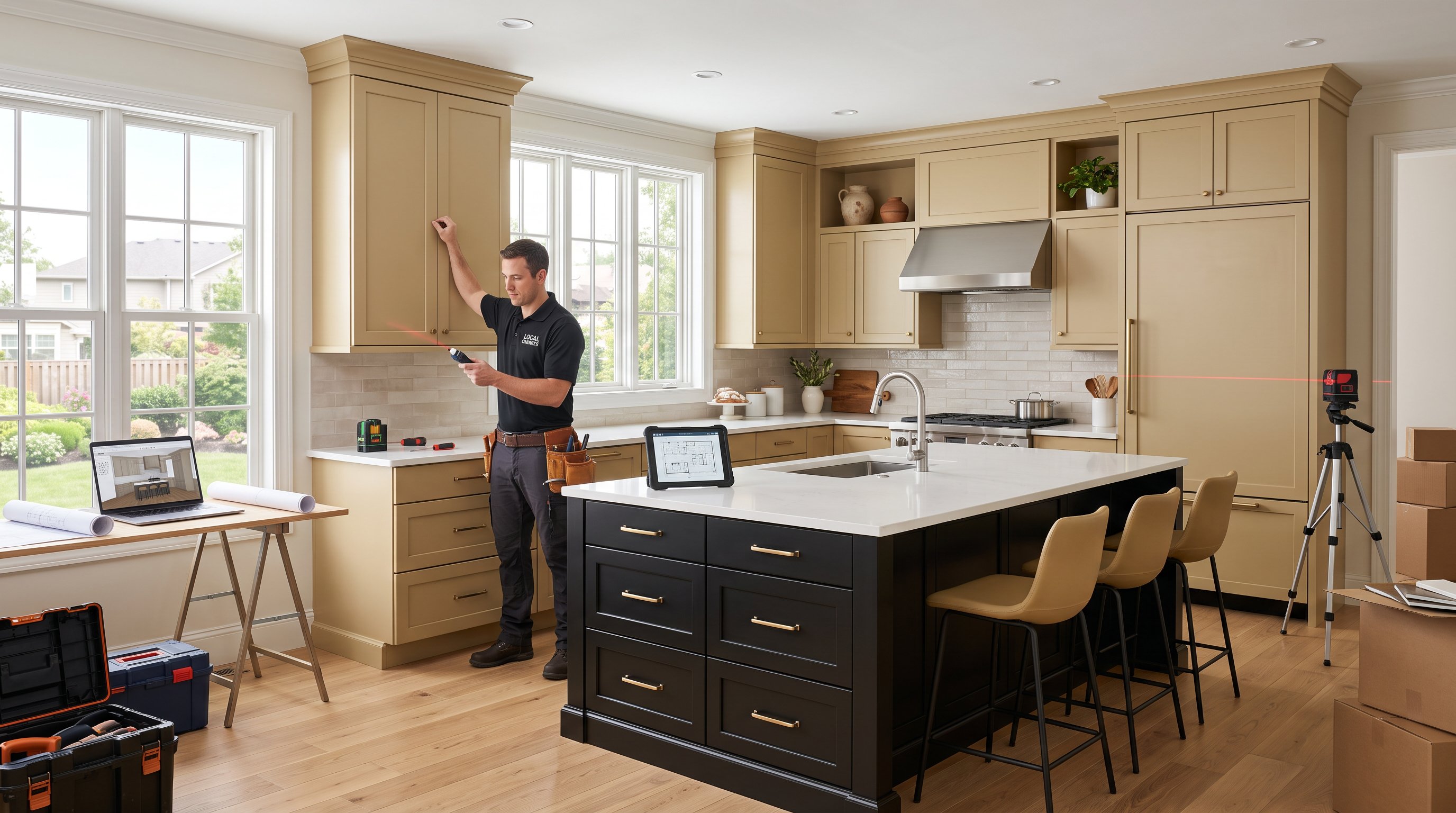
Searching for kitchen cabinets installed near me usually starts with photos and price shopping. But in Utah, the right installer does a lot more than set boxes on a wall. Dry winters, busy family layouts, heavy appliance loads, and even seismic anchoring all affect how well your kitchen performs over time. As we help homeowners across Salt Lake and Utah counties plan remodels, we've seen one thing again and again: the best result comes from matching the right cabinet type with the right installer. Here's how to compare your options in 2026 without getting buried in vague estimates or showroom jargon.
What To Expect From A Local Kitchen Cabinet Installation Service
A solid local cabinet installer should handle more than delivery and fastening. In most Utah kitchen remodels, installation is tied to design review, field measurements, scheduling, demolition coordination, and final fit around countertops, flooring, and backsplash work.
At minimum, you should expect an in-home consultation, precise measurements, a written scope, and a realistic timeline. For full remodels, many projects take 4 to 8 weeks from demo to final finish work, depending on plumbing moves, electrical changes, and countertop fabrication.
Good installers also account for local conditions. Utah's dry climate can be rough on lower-grade materials, especially painted doors with solid wood center panels that may shift or crack at joints. And because we live along the Wasatch Fault, upper cabinets need proper anchoring into framing, not just drywall and hope.
The best companies also communicate clearly. Weekly updates, dust control, clean work areas, and coordination with other trades matter just as much as straight reveals and smooth drawer fronts.
How To Tell Whether You Need Stock, Semi-Custom, Or Custom Cabinets
Cabinet selection usually comes down to three things: your budget, your layout, and how tailored you want the kitchen to feel. Stock cabinets are pre-made in standard sizes. Semi-custom gives you more flexibility in sizing, finishes, and accessories. Custom cabinetry is built to your exact space, down to the millimeter.
For many Utah homeowners, semi-custom hits the sweet spot. It gives you better design flexibility without the full cost of custom millwork. That can be especially useful if you want upgrades like deep drawer banks, pull-out trash storage, or a larger island without redesigning every cabinet from scratch.
Custom becomes more attractive when your kitchen has awkward dimensions, tall ceilings, unusual appliance specs, or you want statement features like a hidden pantry, appliance garage, or integrated lighting. The installer you choose should be able to explain these tradeoffs in plain English, not push the most expensive option by default.
When Stock Cabinets Make Sense
Stock cabinets make sense when your layout is straightforward and you're doing more of a rip-and-replace than a total rework. If the sink, appliances, and plumbing stay in place, stock sizes can often keep labor and material costs under control.
They're also practical for rental properties, starter homes, or homeowners who want a clean visual update without chasing every premium feature. If you choose stock, installation quality matters even more. A skilled installer can use fillers, trim details, and careful leveling to make standard cabinets look far better than their price point suggests.
When Custom Cabinet Installation Is Worth The Investment
Custom cabinet installation is worth it when the kitchen needs to solve real daily problems, not just look better. Busy families often benefit from oversized islands, custom drawer organization, hidden recycling pull-outs, coffee stations, and storage planned around how they actually cook.
Custom also pays off in homes where architecture matters. Think floor-to-ceiling cabinetry, built-in refrigerator panels, specialty wood species, or a two-tone design with a Rift-Sawn White Oak island and painted perimeter cabinets. In these projects, precision is everything. Poor installation can ruin expensive cabinetry fast, while expert fitting makes the whole space feel seamless and intentional.
How To Compare Cabinet Installers Near You Without Overpaying
When comparing local companies for kitchen cabinet installation, don't judge by the bottom-line number alone. Two quotes can look similar on paper while covering very different levels of service.
Start by asking whether the estimate is itemized. You want to see what includes design, demolition, installation, hardware, trim, punch work, and trade coordination. Vague bids often turn into expensive surprises later.
Next, look at how each installer approaches planning. Do they provide field-verified measurements? 3D renderings? Material guidance based on Utah's climate? Those steps reduce mistakes and help you understand what you're buying before work begins.
Also compare craftsmanship details. Ask how they handle crown alignment, scribe fillers, appliance clearances, soft-close hardware, and cabinet anchoring. If one contractor seems rushed or dismissive here, that's a red flag.
And yes, reviews matter, but read them for patterns. Consistent praise for communication, cleanliness, and problem-solving usually tells you more than a generic five-star rating. A fair price is important. Paying to have the job done once is usually cheaper than paying to fix it twice.
Questions To Ask Before Hiring A Kitchen Cabinet Installer
Before hiring anyone, ask questions that reveal how they think, not just how they sell.
Start with the basics:
- Are you licensed and insured in Utah?
- Do you handle design, installation, and project coordination in-house or through subs?
- Will I receive an itemized quote?
- How do you verify measurements before ordering?
- What's the expected timeline from demo to completion?
Then get more specific:
- What cabinet lines or construction options do you recommend for my budget?
- How do your materials hold up in Utah's dry climate?
- How will upper cabinets be anchored for safety?
- What happens if walls, floors, or soffits are out of level?
- Do you offer renderings so I can review the layout first?
If you're considering a company like Caliber Cabinets, this is also the time to ask about semi-custom versus fully custom options, refacing, integrated storage upgrades, and finish choices like painted MDF/HDF versus maple, walnut, or white oak.
A good installer won't dodge these questions. They'll answer directly, explain tradeoffs, and help you make decisions that fit both your home and your budget.
How Cabinet Design, Measurements, And Installation Work Together
This is where many remodels go sideways. Homeowners often treat design, measurement, and installation as separate steps, but they're tightly connected.
A smart cabinet design has to reflect the real room, not the hopeful version of it. That means measuring wall lengths, ceiling variation, window trim, floor slope, vent locations, appliance specs, and traffic flow. Even a small measuring error can throw off filler widths, countertop overhangs, or the ability to open a dishwasher next to an island.
That's why we're big believers in design-first planning. Detailed measurements plus 3D renderings help you catch issues early and see how elements like the hood, island lighting, and pantry storage work together. It's much easier to adjust a plan on a screen than after cabinets are already built.
Installation is the final proof of the design. If the layout was thoughtful and the measurements were accurate, the install feels smooth: reveals stay even, drawers clear properly, appliances fit, and the finished kitchen looks intentional.
For Utah homeowners, that full-process approach matters. Whether you choose budget-friendly semi-custom or fully custom cabinets Utah families can grow into, the kitchen only performs as well as the planning behind it.
If you're searching for kitchen cabinets installed near me, choose the installer who can connect all three pieces, design, measurement, and craftsmanship. That's how you get a kitchen that not only photographs well in 2026, but still works beautifully years from now.