Lehi Custom Cabinets: Craftsmanship You Can Trust For A Kitchen That Lasts In 2026
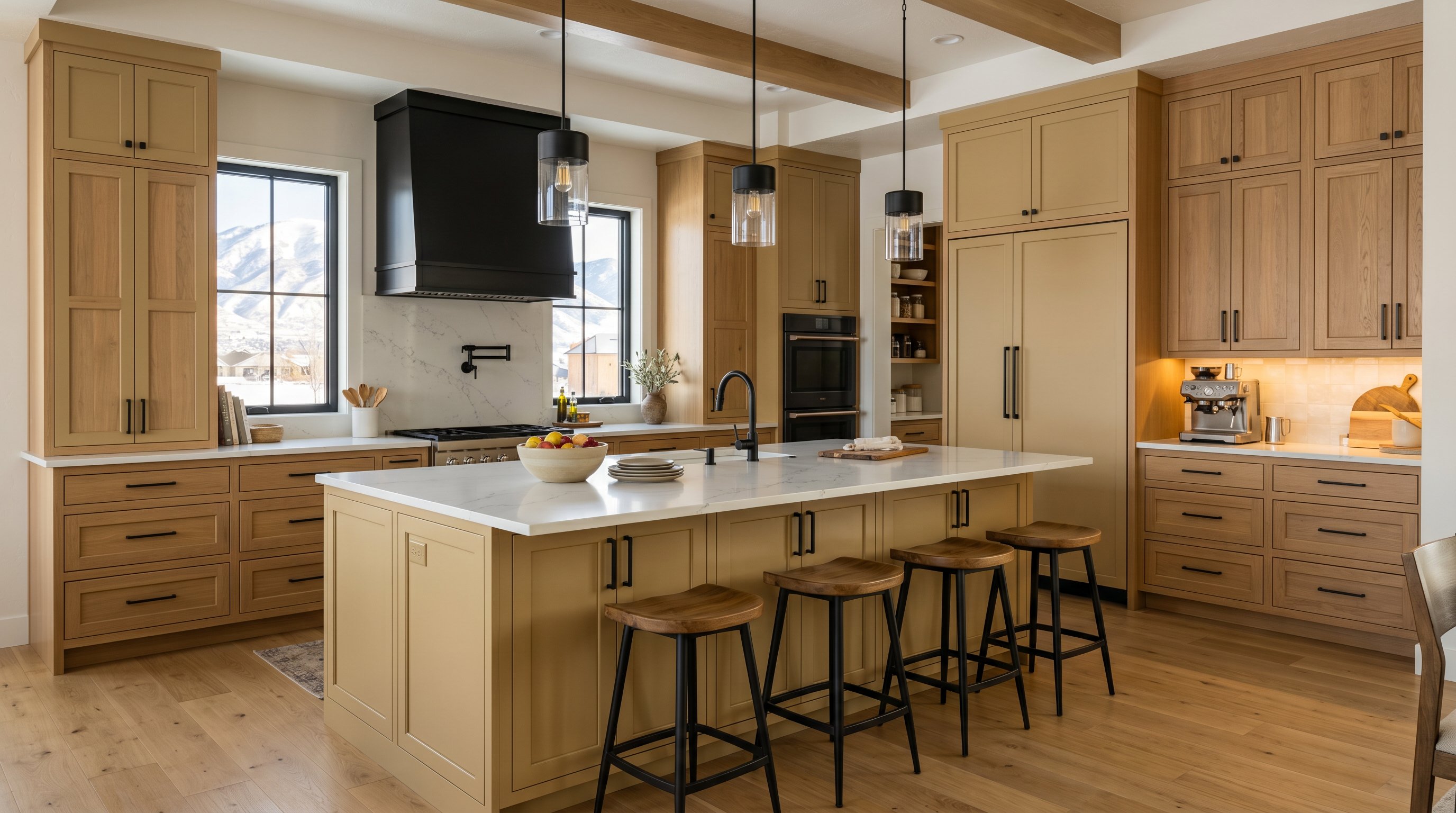
A kitchen remodel is easy to get wrong. Plenty of cabinets look great on day one, then start showing stress when daily life, dry Utah winters, and heavy use take over. That's why Lehi homeowners tend to look past surface-level style and focus on something more important: lasting craftsmanship. We've seen the difference thoughtful cabinet design, quality materials, and skilled installation make in real homes. In this guide, we'll break down what to look for in Lehi custom cabinets, how to weigh value against cost, and how to choose a cabinet partner you can trust for a space that works hard for years.
Why Custom Cabinets Are A Smart Investment For Lehi Homes
Custom cabinets do more than upgrade appearances. In Lehi, they solve real layout and lifestyle problems that stock options usually can't. Many homes need storage that fits growing families, oversized islands, double refrigerators, or awkward wall dimensions. Built-to-order cabinetry makes that possible without fillers, wasted corners, or generic sizing.
There's also the Utah factor. Our dry climate can be rough on poorly built doors and weak finishes. Materials and construction methods matter here more than many homeowners realize. A cabinet system designed for the Wasatch Front should account for expansion, contraction, and long-term stability.
From a resale perspective, custom cabinetry also signals quality. Buyers notice soft-close hardware, deep drawer banks, integrated organizers, and a layout that feels intentional. And if you plan to stay put, the daily return is even better: smoother routines, less clutter, and storage that actually supports how your household lives.
What Trusted Craftsmanship Looks Like In Custom Cabinetry
Trusted craftsmanship isn't just a polished showroom phrase. It shows up in the details homeowners live with every day.
First, there's construction quality. Strong cabinet boxes, durable joinery, properly aligned doors, and heavy-duty hardware all affect longevity. Soft-close slides and hinges should feel solid, not flimsy. Drawers should glide smoothly even when loaded with cookware.
Second, there's finish quality. In Utah, painted finishes need the right substrate to resist cracking at joints. That's one reason many professionals recommend HDF center panels for painted doors in dry climates. Stained wood cabinets, especially in white oak or walnut, should have consistent grain matching and a finish that protects without looking plastic.
Finally, craftsmanship includes installation. Even beautiful cabinets fail if they're installed carelessly. Level runs, tight reveals, secure anchoring, and precise fit around appliances all matter. For homes along the Wasatch Front, proper structural fastening for heavy upper cabinets is a genuine safety issue, not a minor detail.
How The Design Process Turns Ideas Into Functional Storage
Good custom cabinetry starts long before fabrication. The design process is where inspiration gets tested against real life.
We think the best process begins with questions: How do you cook? Where does clutter collect? Who uses the kitchen most? A family that meal preps every Sunday needs something very different from a homeowner who entertains with a hidden butler's pantry and a statement island.
From there, measurements and layout planning shape the possibilities. This is where 3D renderings become especially helpful. Seeing your island, hood, lighting, and cabinet proportions in advance makes decision-making easier and reduces expensive surprises.
Then comes the functional layer. Deep drawer banks often outperform standard lower cabinets. Pull-out trash systems, spice storage, tray dividers, appliance garages, and coffee bars can reclaim a surprising amount of usable space. The point isn't adding every upgrade on the list. It's building storage that fits your habits, so the finished room feels calmer, cleaner, and easier to use.
Key Features To Consider For Kitchens, Bathrooms, And Built-Ins
Not every room needs the same cabinet strategy, but smart features tend to pay off across the house.
In kitchens, prioritize usability. Deep drawers for pots and dishes, corner solutions like Le Mans pull-outs, integrated LED lighting, and wide pantry storage can change how the room functions. For Lehi families, large reinforced islands and cabinets designed around full-size appliances are often worth the investment.
In bathrooms, focus on moisture resistance, easy-clean finishes, and storage that reduces countertop mess. Custom bathroom vanities can include drawer dividers, pull-outs for hair tools, and smarter sink-base configurations.
For mudrooms, home offices, and living room built-ins, think beyond shelves. Bench seating, locker systems, concealed charging stations, and media storage make custom built-ins feel tailored instead of decorative.
And yes, style matters too. In 2026, we're seeing plenty of two-tone cabinetry, moody painted finishes, and warm wood accents. The best designs balance trend appeal with materials and layouts that won't feel dated in a few years.
Balancing Quality, Style, And Budget Without Cutting Corners
A smart remodel budget isn't about choosing the cheapest bid. It's about knowing where quality matters most.
Cabinet construction, hardware, and installation are usually poor places to cut corners. Cheap slides, thin boxes, and weak finishes may save money upfront, but they tend to show wear quickly. In a high-use kitchen, that shortcut gets expensive later.
Instead, we recommend balancing the investment. For example, a semi-custom cabinet line may work well for a budget-conscious project, while strategic upgrades go into the features you touch every day, like drawer systems, organizers, and soft-close hardware. Painted MDF or maple can help control costs, while premium species like Rift-Sawn White Oak or walnut raise the finish level.
Scope matters too. A rip-and-replace is typically more affordable than moving plumbing, gas, and electrical. Transparent, itemized quotes make these tradeoffs clearer. That's one reason many Lehi homeowners appreciate a company like Caliber Cabinets, which offers flexible pricing options without treating quality like an optional extra.
Questions To Ask Before Hiring A Custom Cabinet Maker In Lehi
Before hiring anyone, ask questions that go deeper than style samples and lead times.
Start with experience. Have they handled Lehi custom cabinets and full kitchen remodels in Utah's dry climate? Do they understand local construction realities, including proper anchoring and material choices for long-term durability?
Ask about process. Will you get an in-home consultation, a detailed estimate, and 3D renderings before work begins? How do they handle scheduling, dust control, and communication during the remodel?
Then ask about materials and build options. Do they offer semi-custom and fully custom cabinetry? What hardware brands do they use? How are painted finishes engineered to hold up through Utah winters?
Finally, ask who's responsible from start to finish. A licensed and insured contractor who manages design, fabrication, and kitchen cabinet installation usually creates a smoother experience than a loose chain of subcontractors. If the answers sound vague, that's useful information too.
Conclusion
Great cabinetry should do more than fill a wall. It should support daily life, hold up in Utah's climate, and make your home feel thoughtfully built. For Lehi homeowners, the right custom cabinet maker brings design sense, technical skill, and honest guidance to the table. When those pieces come together, you don't just get a better-looking kitchen. You get one that lasts.