Orem’s Leading Affordable Cabinet Installers: How To Get Quality Craftsmanship Without Overspending In 2026
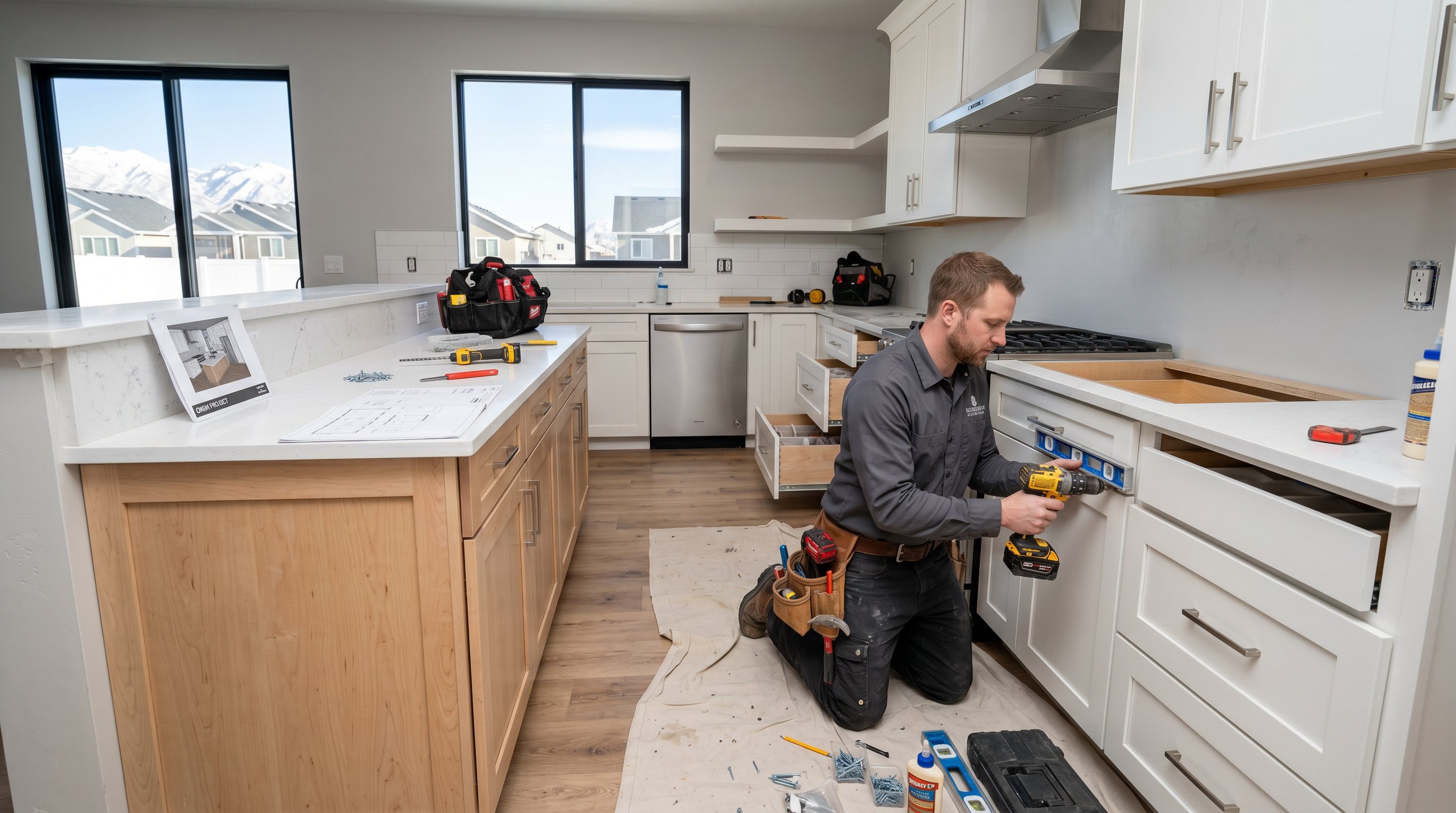
Cabinet installation can make or break a kitchen remodel. In Orem, homeowners usually aren't looking for the cheapest bid, they're looking for lasting value: clean lines, solid materials, smart storage, and pricing that doesn't spiral halfway through the project. That's the sweet spot. In 2026, affordable cabinet installation means knowing where to invest, where to simplify, and how to spot true craftsmanship before work begins. We've helped Utah homeowners think through those tradeoffs, and in this guide, we'll walk through what affordability really means, how cabinet types affect cost, and what to expect from design to final install.
What Makes A Cabinet Installer Affordable Without Cutting Corners
Affordable doesn't mean bare-bones. It means the installer helps you spend intentionally.
A quality cabinet installer in Orem keeps costs under control by tightening the process, not by using weak materials or rushing labor. That usually shows up in a few ways: accurate measurements, itemized quotes, realistic timelines, and recommendations that match your home rather than upselling every possible feature.
For example, a smart installer may suggest semi-custom cabinetry for the perimeter and reserve custom work for the island, pantry wall, or awkward corners where standard sizes waste space. That's how you protect your budget without sacrificing function.
In Utah, affordability also includes building for local conditions. Dry winters can stress lower-grade cabinet components, and heavy upper cabinets need secure anchoring into framing. If an installer ignores those details, the "cheap" option can get expensive fast. Good value comes from craftsmanship, durable materials, and a plan that avoids costly surprises.
Signs You’re Hiring A Reliable Cabinet Installer In Orem
Reliability is partly about workmanship and partly about how the company behaves before the first cabinet arrives.
Look for installers who communicate clearly, show local project experience, and can explain their process without dancing around the details. A reliable team should be able to discuss cabinet grade, hardware quality, timeline expectations, and whether your project is a simple rip-and-replace or a more complex layout change.
A few strong signs:
- They're licensed and insured.
- They provide written, itemized estimates.
- They offer in-home consultation and precise field measurements.
- They can show real project photos, not just inspiration images.
- They talk openly about dust control, scheduling, and final punch-list work.
For homeowners comparing kitchen cabinet installation companies, transparency matters as much as price. At Caliber Cabinets, for instance, we've found that 3D renderings and weekly updates reduce budget anxiety because clients can see the plan before construction starts. That kind of clarity usually signals a professional operation, not a crew figuring it out as they go.
How Custom, Semi-Custom, And Stock Cabinets Affect Your Budget
Your cabinet category has one of the biggest impacts on total remodel cost.
Stock cabinets are the most budget-friendly. They come in fixed sizes, limited finishes, and fewer accessory options. They can work well in straightforward layouts, but fillers and wasted space often reduce the value.
Semi-custom cabinets are the middle ground and, for many Orem homeowners, the sweet spot. You get more flexibility in sizing, finish options, storage accessories, and design details without paying full custom pricing. This is often ideal for families who want better organization, soft-close hardware, and a polished look at a manageable price.
Custom cabinets cost more because they're built specifically for your space and lifestyle. That's where you can add deep drawer banks, integrated appliance garages, oversized islands, hidden trash pull-outs, or floor-to-ceiling pantry storage.
The right answer isn't always "go custom everywhere." Often, the most cost-effective route is mixing cabinet types strategically. A good cabinet design Utah homeowners can live with for years balances aesthetics, storage, and day-to-day function, not just upfront price.
Where Homeowners Can Save Money During Cabinet Installation
There are real ways to lower costs without ending up with a kitchen you regret.
The biggest saver is keeping the layout intact. If your sink, gas range, and major appliances stay in roughly the same locations, you can avoid a cascade of plumbing, electrical, drywall, and flooring changes. That alone can preserve a big portion of the budget.
Other practical ways to save include:
- Choosing semi-custom over full custom where standard sizes fit well
- Using painted finishes or maple instead of premium walnut or rift-sawn white oak
- Prioritizing a few high-impact upgrades rather than every accessory
- Refacing structurally sound cabinets instead of replacing all boxes
- Installing custom organization only where it matters most, like trash pull-outs or pot drawers
And here's one many people miss: accurate planning saves money. Last-minute design changes, rushed product substitutions, and poor measurements create avoidable cost. That's why companies that provide detailed renderings, like Caliber Cabinets, can actually help keep a remodel on budget. Better decisions upfront usually mean fewer expensive fixes later.
Questions To Ask Before Choosing A Cabinet Installation Company
A good consultation should leave you with fewer unknowns, not more. Before hiring a cabinet installer, ask direct questions.
Start here:
- What's included in the estimate? Ask whether demo, haul-off, hardware, trim, touch-up, and final adjustments are part of the quoted price.
- Who handles measurements and installation? You want accountability, not finger-pointing between salespeople, subcontractors, and suppliers.
- How do you handle Utah's dry climate? Material recommendations matter, especially for painted finishes.
- How are upper cabinets anchored? In earthquake-prone areas near the Wasatch Fault, that answer should be specific.
- What does your timeline look like? Most projects run about 4 to 8 weeks depending on scope.
- Can I see recent local work? Orem and Utah County homes have their own layout quirks and style preferences.
Also ask how the company communicates during the job. If they can't explain scheduling, trade coordination, or change orders clearly before signing, that usually won't improve once the project begins.
What To Expect From Design To Final Installation
The best cabinet projects feel organized from day one.
Most jobs begin with an in-home consultation, measurements, and a conversation about budget, layout, and must-have features. From there, the design phase should turn your ideas into something tangible, often with 3D renderings that show cabinet placement, island size, appliance fit, and finish combinations.
Once the design is approved, material selections are finalized and the installation schedule is built. If the remodel includes more than cabinetry, say countertops, flooring installation, or lighting, coordination becomes just as important as craftsmanship.
During installation, expect demolition, prep, cabinet setting, leveling, anchoring, trim work, and hardware fitting. Then comes countertop templating, followed by final adjustments after tops and backsplash are complete. A professional crew should also address dust control and keep the work zone contained.
For a straightforward kitchen cabinet installation, the path is fairly predictable. For a full remodel, there are more moving parts. Either way, the goal is the same: cabinets that look sharp, function beautifully, and still feel solid years from now.
Conclusion
Affordable cabinet installation in Orem isn't about chasing the lowest number on a quote. It's about choosing a team that knows where quality matters, where savings are realistic, and how to build for Utah homes. When design, materials, and installation are handled well, you don't just save money, you avoid the kind of mistakes that cost more later.