Salt Lake Cabinets In 2026: How To Choose Beautiful, Functional Cabinetry For Your Utah Home
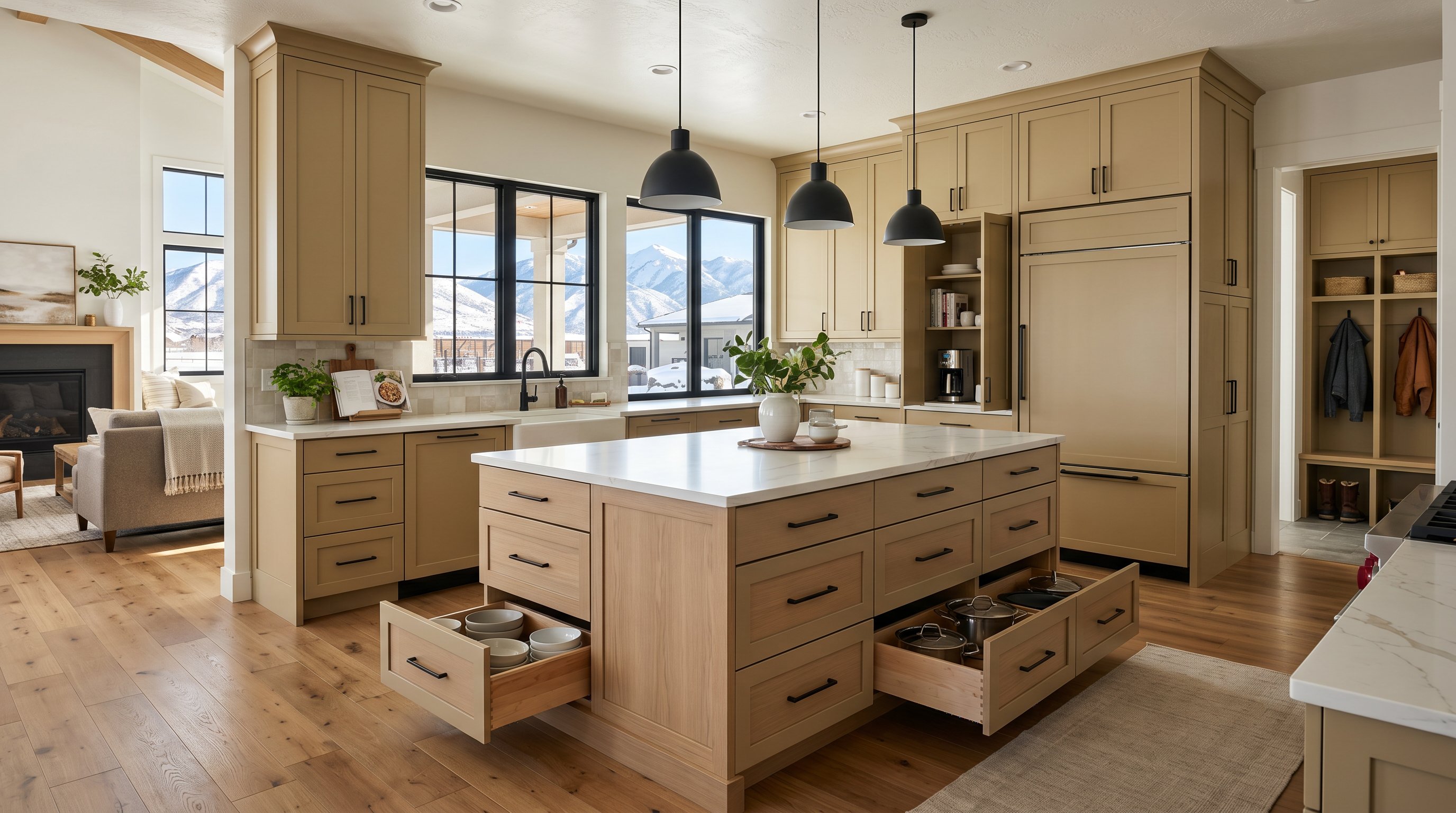
Cabinets do more work than almost anything else in a home. They set the look of the kitchen, control how storage functions, and take a daily beating from dry air, busy families, and constant use. For Utah homeowners, choosing the right Salt Lake cabinets in 2026 means thinking beyond color swatches and showroom doors. We need cabinetry that fits the way we actually live here, open gathering spaces, hard-working mudrooms, oversized islands, and finishes that can handle the Wasatch Front's climate. In this guide, we'll walk through styles, construction options, pricing, and the practical upgrades that make cabinets worth the investment.
Why Cabinets Matter In Salt Lake Homes
In Salt Lake homes, cabinetry isn't just decorative millwork. It's part of how the house functions every single day. Good cabinets define traffic flow in the kitchen, create order in bathrooms and laundry rooms, and turn awkward walls into useful built-ins.
That matters even more in Utah, where many families want large gathering spaces, durable storage, and layouts that can handle real life. We see it all the time: homeowners want room for bulk pantry storage, seating for a crowd, and cabinetry that makes the kitchen feel clean instead of chaotic.
There's also the local climate factor. Utah's dry winters are tough on low-quality cabinet doors and paint finishes. Cheap materials can warp, shrink, or show cracked joints faster here than in milder regions. And because we live near the Wasatch Fault, proper installation and anchoring matter too, especially for heavy upper cabinets loaded with dishes.
So when people search for Salt Lake cabinets, they're usually not just buying boxes. They're investing in durability, storage, and a home that works better.
Popular Cabinet Styles For Kitchens, Bathrooms, And Built-Ins
Cabinet style trends in 2026 are leaning warmer, more tailored, and a little less one-note than the all-white kitchens that dominated for years. Clean lines still matter, but homeowners are asking for more texture, contrast, and personality.
For kitchens, shaker remains the safest classic, especially slim shaker profiles that feel updated rather than overly traditional. But we're also seeing strong demand for flat-panel cabinets in modern homes and transitional spaces. Two-tone kitchens are big in Utah right now: think painted perimeter cabinets in charcoal, deep green, or navy, paired with a natural white oak island.
In bathrooms, floating vanities and warm wood tones are popular because they make smaller spaces feel lighter and more custom. Built-in linen towers, drawer-heavy vanities, and integrated lighting are becoming standard upgrades rather than luxuries.
Built-ins are getting smarter too. Mudrooms with full locker systems, bench seating, and overhead storage are especially valuable for active families. In living rooms and home offices, we're seeing more floor-to-ceiling cabinetry, appliance garages, hidden charging drawers, and media walls that look polished instead of pieced together.
The best style choice usually comes down to the architecture of the home, how much maintenance you want, and whether you want timeless or trend-forward cabinetry.
How To Choose Between Custom, Semi-Custom, And Stock Cabinets
This is where many remodel budgets are won or lost. Custom, semi-custom, and stock cabinets each serve a different purpose, and the right choice depends on your space, priorities, and how tailored you want the final result to feel.
Stock cabinets are the most budget-friendly. They come in fixed sizes, limited finishes, and fewer configuration options. They can work for simple layouts or secondary spaces, but they rarely maximize storage well and can look generic in higher-end homes.
Semi-custom cabinets hit a sweet spot for many Utah homeowners. You get better construction, more finish choices, and some flexibility in dimensions and accessories without going fully bespoke. If you want quality craftsmanship with more controlled pricing, this category often makes the most sense.
Custom cabinets are built specifically for your room. That means every inch can be used intentionally, around unusual walls, tall ceilings, oversized appliances, or specialty storage. For kitchens with major layout changes, statement islands, or hidden pantry doors, custom cabinetry delivers the cleanest result.
At Caliber Cabinets, we often tell homeowners to choose based on function first. If your kitchen has odd dimensions, you want built-ins that look seamless, or you care deeply about storage performance, custom usually pays off. If your layout is straightforward and budget discipline matters most, semi-custom can be the smarter move.
Materials And Finishes That Hold Up Well In Utah Homes
Utah's zero-humidity winters change the conversation around cabinet materials. A finish that looks great in a catalog doesn't always perform well once indoor air gets brutally dry.
For painted cabinets, HDF or MDF center panels are often the safer choice because they don't expand and contract the way solid wood does. That helps reduce visible cracking at joints and keeps painted doors looking cleaner over time. For stained cabinets, maple, white oak, and walnut remain strong choices, with rift-sawn white oak especially popular for a warm, premium look.
Finish quality matters as much as wood species. A well-applied, furniture-grade finish will outlast a cheap spray job every time. In busy homes, we also like durable matte or satin finishes because they hide fingerprints better than high-gloss surfaces.
If you're investing in Salt Lake cabinets for the long haul, ask not just what the doors are made of, but how they're built, finished, and expected to move in Utah's climate.
Storage Features That Improve Everyday Function
Pretty cabinets are nice. Cabinets that save you 20 minutes a day are better.
The most useful upgrades usually happen inside the cabinets. Deep drawer banks often outperform standard lower doors because they bring pots, pans, dishes, and food storage out into the open instead of making you crouch and reach into dark corners. Built-in peg systems for plates, knife blocks, trash pull-outs, and recycling drawers are practical improvements you notice immediately.
Corner storage has improved a lot too. Le Mans pull-outs, blind-corner organizers, and tray dividers can turn dead space into something functional. In taller cabinetry, pull-out spice racks, vertical baking-sheet storage, and pantry roll-outs help keep everything visible.
For families who want cleaner counters, appliance garages and coffee bars are worth a look. And for higher-end remodels, hidden walk-in pantries and integrated LED cabinet lighting can make the kitchen feel dramatically more organized and polished.
When we design cabinets, we try to match storage to actual habits, not some idealized version of how people think they live.
What To Expect From Cabinet Design, Pricing, And Installation
A successful cabinet project usually starts long before materials are ordered. Design is where function, style, and budget get aligned. In 2026, most serious cabinet companies, Caliber Cabinets included, use realistic 3D renderings so homeowners can see how their island, hood, storage walls, and finishes work together before construction begins.
Pricing depends on a few major factors: cabinet grade, material selection, finish type, storage accessories, and whether the remodel is a simple rip-and-replace or a full layout change. Painted MDF or standard maple will usually cost less than premium stained walnut or rift-sawn white oak. Semi-custom cabinetry can keep costs flexible, while fully custom work climbs as design complexity increases.
The "guts" of the cabinets also affect price more than many homeowners expect. Soft-close hardware, deep drawer stacks, hidden trash systems, rollout trays, specialty corner hardware, and integrated lighting all add cost, but they often deliver the biggest daily payoff.
Installation matters just as much as fabrication. Heavy upper cabinets need to be anchored correctly into framing, especially in earthquake-prone Utah. Clean installation also includes scribing to uneven walls, aligning reveals, adjusting doors and drawers, and coordinating with countertops, plumbing, electrical, and flooring.
Timeline-wise, many kitchen remodels land in the 4-to-8-week range from demo to final countertop and backsplash work, depending on scope. The best experience usually comes from clear communication, itemized pricing, and a team that manages the full process rather than leaving homeowners to chase trades on their own.
Conclusion
Choosing Salt Lake cabinets well means balancing beauty, durability, and how your home actually functions. The right cabinetry should fit Utah's climate, support everyday routines, and make the space feel intentionally designed. If you're planning a remodel, we'd focus first on storage and construction quality, because stylish cabinets are good, but stylish cabinets that work hard for years are the real win.