Cabinet Refacing Vs Replacing In Eagle Mountain: How To Choose The Best Kitchen Upgrade In 2026
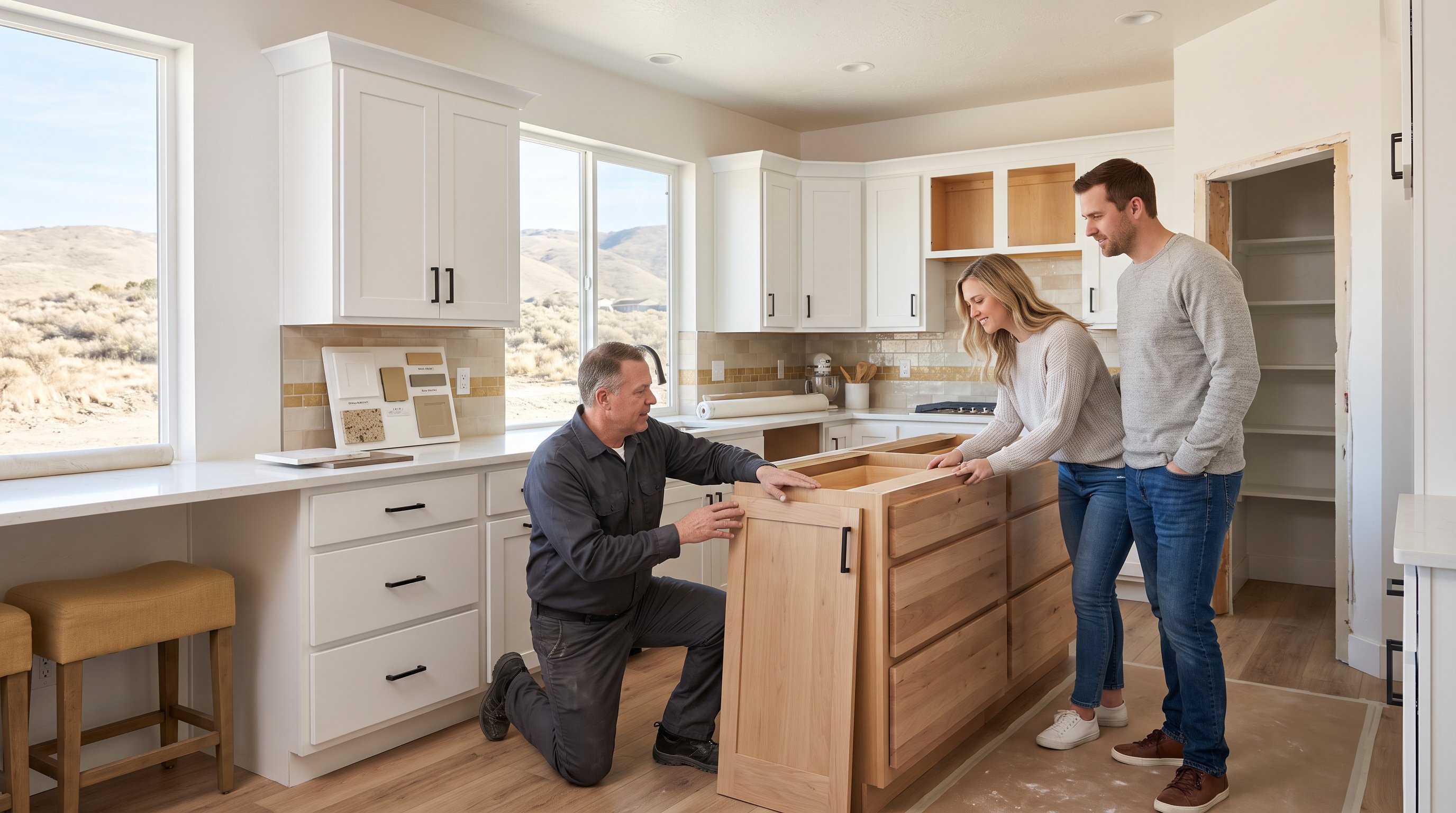
A kitchen can look fine at 8 a.m. and feel painfully outdated by dinner. That's usually when the real question hits: do we keep the cabinet boxes and refresh the look, or tear everything out and start over? In Eagle Mountain, where families want harder-working kitchens without wasting money, the right answer depends less on trends and more on cabinet condition, layout, and how we actually live in the space.
What Cabinet Refacing And Cabinet Replacing Actually Mean
Cabinet refacing means keeping the existing cabinet boxes and changing the visible parts. In most projects, we install new doors, drawer fronts, hinges, pulls, and matching end panels or veneer so the kitchen reads as new. If the cabinet frames are solid and the layout already works, refacing can deliver a major visual change without full demolition.
Cabinet replacing means removing the old cabinetry and installing new cabinets from the ground up. That opens the door to changing the footprint, adding taller uppers, building deeper drawers, fixing awkward corners, or creating space for bigger appliances. It also lets us address hidden issues like water damage, poor anchoring, or builder-grade boxes that were never worth saving.
The simplest way to think about it: refacing changes the skin: replacing changes the structure. We often tell homeowners that the decision starts with honesty. If the bones are good, cabinet refacing can be a smart move. If the bones are failing, replacing is usually cheaper than trying to rescue a bad setup twice.
When Refacing Makes Sense For Eagle Mountain Homeowners
Refacing makes sense when your cabinet boxes are structurally sound and your kitchen layout still serves your family. If the drawers glide well, the frames are square, and you're not fighting the room every day, there's no reason to rip out good material just to get a new look.
This option works especially well in Eagle Mountain homes built with decent cabinet boxes but dated finishes. A lot of homeowners want to move from orange-toned wood or worn thermofoil to painted shaker fronts, warmer stains, or a cleaner two-tone design. Refacing handles that cosmetic gap well.
It's also a strong choice when we want to control spending. Since we aren't rebuilding the whole cabinet system, budget can shift toward better hardware, upgraded counters, or lighting. For families focused on function, pairing refacing with a few strategic storage upgrades often goes farther than expected. Ideas like pull-out trash, drawer inserts, and smarter pantry zones matter more day to day than people think, especially when paired with smart storage.
Refacing also creates less mess. That matters if you're living in the house during the project and want your kitchen back fast.
Signs Your Cabinets Should Be Replaced Instead
Replace your cabinets when the structure, layout, or storage performance is the real problem. New doors won't fix sagging boxes, water-swollen particleboard, failing drawer tracks, or cabinets that were installed out of level from the start.
We usually recommend replacing when homeowners say things like, "We hate where the fridge is," "There's nowhere for pots," or "The island is too small." Those are design problems, not finish problems. If the kitchen needs wider drawer banks, a pantry wall, a better prep zone, or room for a large range, refacing won't get you there.
Utah conditions matter too. Dry winters are hard on cheap materials. Lower-grade doors can warp, painted joints can crack, and older cabinet boxes may not hold up well after years of expansion and shrinkage. In homes near the Wasatch Front, we also care about proper anchoring. Heavy uppers loaded with dishes need solid fastening into framing, not shortcuts.
Replacement is also the right move when you want a full style shift with better construction. Many Eagle Mountain remodels now include custom islands, appliance garages, and deeper lower drawers. If that's the goal, custom cabinets usually make more sense than dressing up boxes that still behave like old builder-grade cabinets.
Cost, Timeline, And Disruption: What To Expect From Each Option
Refacing usually costs less and finishes faster, while replacing costs more but solves more problems. That's the trade-off in plain English.
For many Eagle Mountain kitchens, refacing is the lower-disruption path because the cabinet boxes stay in place. Demo is lighter, the countertop may be able to stay, and the kitchen often returns to service sooner. Replacing is a bigger project because we remove the cabinets, inspect walls and floors, and often coordinate plumbing, electrical, countertops, and finish work at the same time.
At Caliber Cabinets, we don't throw out fake flat-rate numbers because kitchen size, materials, and scope change everything. But we can say this with confidence: a simple rip-and-replace costs far less than moving plumbing and gas lines, and a refacing project with premium doors and upgraded hardware can cost more than homeowners expect.
Timeline matters just as much as budget. Most full kitchen remodels land in the 4-to-8-week range from demo to final countertop and backsplash work. Refacing can be shorter, but only if the existing boxes are truly worth keeping. When the job involves permits, specialty finishes, or custom fabrication, rushing is what creates callbacks.
Dust and disruption are different too. Full replacement means more demolition, more trades, and more chances for your living room to collect kitchen dust unless the crew uses proper containment. That's why homeowners comparing bids should look past price and think about schedule control, communication, and who's coordinating the moving parts. Choosing the right cabinet installers often has as much impact on the experience as the cabinet style itself.
How Cabinet Layout, Storage Needs, And Material Quality Affect The Decision
Layout, storage, and material quality usually decide the project before color ever does. If your current layout wastes steps, blocks walkways, or leaves dead space in corners, replacing is often the better investment because it fixes the cause instead of the symptom.
Storage needs are where many families change their minds. Once we map where sheet pans, lunchboxes, small appliances, and bulk groceries actually go, standard lower doors stop making sense. Deep drawers, hidden trash pull-outs, vertical tray storage, and reinforced islands change how a kitchen works every day. That's why many homeowners planning kitchen cabinets focus first on workflow, not just finish samples.
Material quality matters in Utah more than people expect. HDF center panels often outperform cheaper painted wood doors in dry conditions because they move less with seasonal humidity changes. Premium species like rift-sawn white oak or walnut bring a different price tier, but they also create a different result.
And then there's labor. A strong design still fails with poor installation. If the remodel involves layout changes, appliance fit, or structural anchoring, the right Utah County team becomes part of the value equation, not an afterthought.
Conclusion
The best choice comes down to this: reface when the boxes are solid and the layout still works: replace when function, structure, or long-term durability are off. In Eagle Mountain, the smartest remodels start with an honest site assessment, not a guess.
What To Look For In A Cabinet Remodeling Contractor In Eagle Mountain
Hire a contractor who can explain why a kitchen should be refaced or replaced before talking about door styles. We'd look for itemized pricing, realistic timelines, 3D renderings, dust-control practices, and proof they understand Utah materials, anchoring, and family-focused layout planning. A qualified cabinet contractor should also show a track record with installed kitchens, not just attractive photos.
Frequently Asked Questions About Cabinet Refacing vs Replacing in Eagle Mountain
What is cabinet refacing and when is it the best option in Eagle Mountain homes?
Cabinet refacing keeps the existing cabinet boxes and replaces doors, drawer fronts, and hardware. It's ideal when the cabinet structure and layout are solid, offering a cost-effective way to update an outdated kitchen without full demolition.
When should Eagle Mountain homeowners consider replacing their kitchen cabinets instead of refacing?
Replacement is recommended if cabinets have structural issues like sagging boxes, water damage, or poor layout. It's the better choice for changing kitchen footprints, fixing functional problems, or upgrading to custom features like deeper drawers or appliance garages.
How do cost and timeline differ between cabinet refacing and replacing?
Refacing generally costs less and completes faster since it preserves the cabinet boxes. Replacing is more expensive and time-consuming due to demolition and potential plumbing or electrical work, typically taking 4 to 8 weeks for a full remodel in Eagle Mountain.
How does Eagle Mountain's dry climate affect cabinet material choices?
Utah’s dry winters cause cheaper cabinet materials to warp or crack. Options like High-Density Fiberboard (HDF) center panels are recommended for painted cabinets since they resist expansion and contraction, ensuring durability and a flawless finish year-round.
Can cabinet refacing improve kitchen storage and functionality?
Yes. When combined with strategic upgrades—such as pull-out trash, drawer inserts, and smart pantry zones—refacing can enhance kitchen usability without replacing the entire cabinet system, making it a practical solution for many Eagle Mountain families.
What should I look for when hiring a cabinet contractor near me in Eagle Mountain?
Choose contractors who provide realistic timelines, itemized pricing, 3D renderings, and dust-control practices. They should understand local materials, anchoring for Utah homes, and family-oriented layouts to ensure a smooth, high-quality remodel experience.