Cabinet Doors Shifting In Lehi Homes: How To Fix Settling Issues Before They Get Worse In 2026
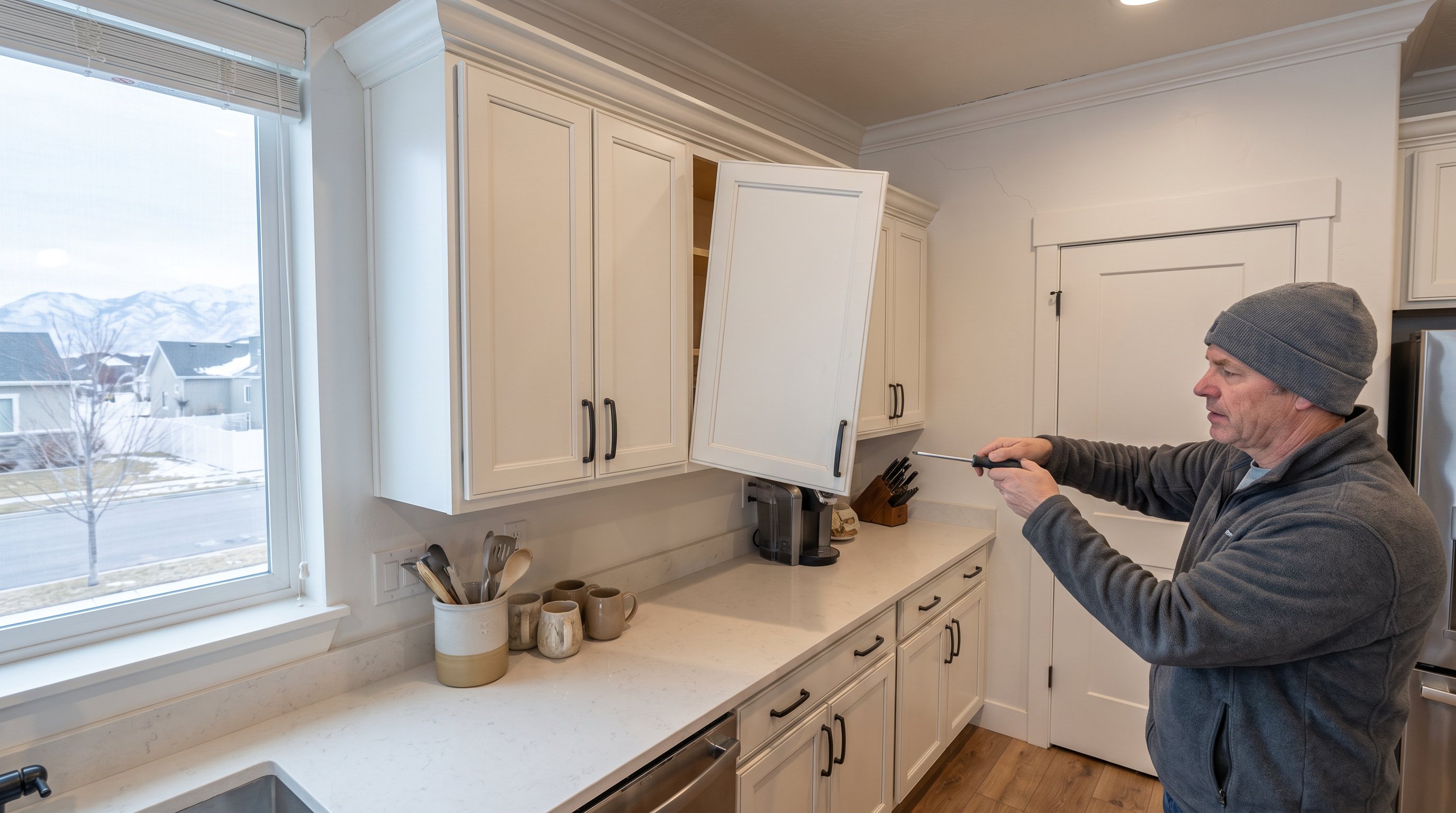
A cabinet door that suddenly rubs, hangs crooked, or refuses to stay lined up usually isn't being dramatic. In many Lehi homes, it's one of the first quiet signals that the house is settling, the air is drying out, or the original installation had a weak point from day one. We've seen small alignment issues turn into cracked face frames, stressed hinges, and frustrated homeowners, so it's worth catching the cause early, especially if you want cabinets that still look sharp and work right in 2026.
Why Cabinet Doors Shift As Lehi Homes Settle
Cabinet doors shift because houses move, and cabinets are rigid. When a Lehi home settles, even slight movement in floors, walls, or ceiling lines can change how cabinet boxes sit against each other, which throws door gaps out of alignment.
Newer neighborhoods in Utah County often experience minor settlement as soil compacts and framing dries. That doesn't always mean structural failure. It does mean finish materials notice first. Cabinets, tile, and trim tend to show movement before homeowners spot anything in the foundation.
Lehi also has a local climate factor. Utah's dry winters pull moisture from wood and lower-grade components, which can lead to shrinking joints, slight warping, and hinge screws loosening over time. That's one reason we often recommend stable materials and better hardware when building Lehi custom cabinets for long-term performance.
Upper cabinets add another layer. They carry weight, and along the Wasatch Front they need serious anchoring into framing, not just drywall. If the cabinet run wasn't installed square or securely fastened, normal house movement can show up fast at the doors.
Common Signs Your Cabinets Are Out Of Alignment
The most common sign is uneven spacing around the doors. If one gap gets tighter while another widens, something has shifted either at the hinge, the box, or the room itself.
Homeowners usually notice one of these first:
- A door rubs the cabinet frame when opening
- Two doors in the same run no longer meet evenly
- Soft-close hinges stop closing cleanly
- Drawer fronts look level, but upper doors don't
- One side of a pantry door sits lower than the other
- Hardware lines no longer look straight across the run
Sometimes the signs spread beyond one cabinet. Crown molding may separate slightly from the ceiling. A scribestrip at the wall might open up. Flooring transitions nearby can start to telegraph movement too, which matters if the kitchen had recent flooring installation Utah homeowners often pair with cabinetry work.
If the problem appeared suddenly after a season change, it may be a moisture or hinge issue. If it's getting worse over months, we treat that as a clue that the cabinet box or surrounding structure may be moving.
How To Tell Whether The Problem Is Hinges, Installation, Or Structural Movement
The fastest way to diagnose shifting cabinet doors is to separate a door problem from a cabinet problem. We start by checking whether the door is out of adjustment, whether the box is out of square, and whether the room is forcing both to move.
A good inspection saves money. Many homeowners assume they need full replacement when a hinge tune-up would solve it. Others keep adjusting hinges on a cabinet run that is actually twisting because the wall or floor moved underneath it.
This is also where installer quality matters. A careful Utah County team checks level, plumb, fastening points, and long-term support instead of just making the doors look straight on install day.
Hinge Adjustment Problems Vs. Cabinet Box Movement
Hinge issues usually show up as isolated door misalignment. One door droops, rubs, or won't sit flush, but the cabinet box itself still measures square and the surrounding reveals look consistent.
Most modern concealed hinges allow side-to-side, up-and-down, and in-and-out adjustment. If the screws are loose or the adjustment cams drifted, we can often correct the issue in minutes. Stripped screw holes, though, need more than a quick turn of a screwdriver.
Cabinet box movement looks different. The doors may be adjusted as far as they can go and still won't align. Face frame joints may open slightly. Adjacent cabinets may no longer sit flush with each other. In that case, the hinge is not the root cause.
When Floors, Walls, Or Moisture Are Part Of The Issue
Structural or environmental issues show up when multiple elements are moving at once. If cabinet doors shift alongside a sloping countertop, a crack at the ceiling line, or a floor that feels uneven, we start looking beyond hardware.
Moisture matters too, even in a dry climate. A sink base with a slow leak can swell the cabinet floor, rack the box, and push doors out of line. On the other end, very dry indoor air can shrink wood components and stress painted joints. That's why stable materials and proper finishing matter in Lehi kitchen cabinets, especially in homes that run hard heat all winter.
When we suspect floor or wall movement, we check with a long level, measure diagonals across the box, and inspect fastening into studs. The pattern tells the story.
Practical Ways To Correct Minor Cabinet Door Shifting
Minor cabinet door shifting is often fixable without tearing out the kitchen. The key is matching the fix to the cause instead of forcing repeated hinge adjustments that only hide the problem for a few weeks.
Start with the hinges. Tighten mounting screws, then make small adjustments one direction at a time. Test the door after each move. If the reveal improves and the door closes cleanly, you're likely dealing with standard seasonal drift or normal hardware movement.
Next, inspect the screw holes. If they're stripped, the hinge plate won't stay put. A repair insert or solid filler fix may hold, but if the cabinet material is weak, the repair won't last. This comes up a lot in older builder-grade units compared with better kitchen cabinets installed with stronger box construction.
For slight cabinet box movement, we may resecure the run to framing, add shims behind fastening points, or realign adjoining cabinets so the stress is distributed correctly. Under upper cabinets, anchoring matters even more because weight and seismic considerations are real in Utah.
If swelling from a sink leak caused the shift, dry the area and solve the leak first. Otherwise, the door problem comes right back.
When To Repair, Reinforce, Or Replace Cabinets In A Settling Home
Repair makes sense when the cabinet boxes are sound and the movement is minor. Reinforcement makes sense when installation or fastening is weak. Replacement makes sense when the materials, layout, or damage level make ongoing repairs a bad investment.
We usually recommend repair when the issue is limited to hinge adjustment, isolated screw failure, or a cabinet run that simply needs to be resecured and tuned. Refacing can also be smart if the boxes are solid but the doors have warped or the finish has failed.
We move toward reinforcement when upper cabinets weren't anchored well, the house has had modest settlement, or homeowners want to keep the layout but improve safety and long-term performance. That's especially important for heavy dish storage and larger kitchen runs. A qualified cabinet contractor near you should evaluate framing attachment, not just door alignment.
Replacement is usually the right call when water damage has swollen multiple boxes, face frames are splitting, particleboard is crumbling, or the kitchen never functioned well in the first place. In those cases, a full remodel often costs less over time than serial repairs. Homeowners comparing options with premier cabinet makers often find that better materials, deep drawer storage, and stable painted panels solve both the cosmetic issue and the daily frustration.
If your doors have shifted once and stayed put, monitor them. If they keep drifting, rubbing, or pulling other parts of the kitchen out of line, it's time to inspect the cause and make a plan before a minor adjustment turns into damaged cabinetry.
Common Questions About Cabinet Doors Shifting in Settling Lehi Homes
Why do cabinet doors shift in settling Lehi homes?
Cabinet doors shift because Lehi homes settle, causing floors, walls, or ceilings to move slightly. This shifts rigid cabinet boxes, misaligning door gaps. Utah's dry climate also shrinks wood and loosens hardware, contributing to shifting over time.
What are the signs that cabinet doors are out of alignment?
Common signs include uneven door spacing, doors rubbing frames, crooked or drooping doors, soft-close hinges failing, and hardware lines that no longer look straight. These issues often indicate cabinet or house movement or hinge problems.
How can you tell if cabinet door issues are due to hinges or structural movement?
If only one door droops or rubs but the cabinet box is square, hinge adjustment usually fixes it. However, if doors don’t align despite adjustments and adjacent cabinets or frames show gaps, the problem likely stems from cabinet box movement or structural settling.
What practical steps can homeowners take to fix minor cabinet door shifting?
Start by tightening and adjusting hinges carefully. Check for stripped screw holes and repair them if needed. If cabinet boxes have shifted, resecuring cabinets to framing with shims or reinforcing anchoring, especially for upper cabinets, often corrects alignment issues.
Why is serious anchoring important for upper cabinets in Lehi homes?
Upper cabinets hold significant weight and in Utah's seismic zone near the Wasatch Fault, strong anchoring directly into structural framing prevents cabinet movement and damage during house settling or minor earthquakes, ensuring safety and durability.
When should cabinets be repaired, reinforced, or replaced in a settling home?
Repair works for minor hinge or fastening issues when boxes remain sound. Reinforcement is advised if installation or anchoring is weak, especially for heavy upper cabinets. Replacement is ideal if water damage, crumbling materials, or extensive wear make repairs impractical.